
50 Fun Facts About the USA You Probably Did Not Know
The USA is one of those countries that keeps surprising you the more you learn about it. One minute, you are reading about a high school student who helped shape the modern American flag. Next, you discover that mail still travels by mule inside the Grand Canyon, or that the world’s largest library sits quietly in Washington, D.C.
That is what makes facts about the USA so addictive. Some are quirky, some are dramatic, and some are beautiful in a very travel-kind of way. And some simply make you pause for a second and think, wait, really?
So, instead of turning this into a dry geography lesson, here is a more curious look at America through its strange details, famous landmarks, natural wonders, food traditions, road trips, and state-by-state surprises.
Fast Facts About America
Some of the best fun facts about the USA are that the current 50-star flag has a high school project story, more than 350 languages are spoken in American homes, the U.S. records more tornadoes than any other country, the Library of Congress is the world’s largest library, Yellowstone became the world’s first national park, and mail is still delivered by mule to Supai inside the Grand Canyon.
How We Checked These USA Facts
This guide was reviewed using official and authoritative sources including the National Park Service, U.S. Census Bureau, NASA, NOAA, USPS, Library of Congress and USGS. Historical and geographic claims were checked against primary sources where possible, while travel recommendations reflect Wanderlust Craze destination research and contributor experience.
USA Fun Facts at a Glance
| Most surprising flag fact | The current 50-star American flag is linked to a high school project. |
|---|---|
| Most dramatic weather fact | The U.S. records more tornadoes than any other country. |
| Most unusual mail route | Mail still travels by mule to Supai inside the Grand Canyon. |
| Most bookish fact | The Library of Congress is the largest library in the world. |
| Most iconic nature fact | Yellowstone became the world’s first national park in 1872. |
50 Fun Facts About the USA
1. Did a High School Student Really Design the American Flag?
Yes. The current 50-star American flag is linked to Robert G. Heft, an Ohio high school student who created a 50-star version as a class project before Alaska and Hawaii officially became states.
It is one of those small American stories that feels almost too neat: homework, history, and timing all stitched into a design that now flies from porches, schools, stadiums, national parks, and government buildings across the country.
2. USA Records More Tornadoes Than Any Other Country
Yes. The United States records more tornadoes than any other country, with NOAA data showing more than 1,000 tornadoes in an average year.
That dramatic weather pattern is one reason the central U.S. has such a strong storm-chasing culture. It also shows how powerful America’s geography can be, especially where warm, moist air, dry air, and cold air meet across the Plains.
3. Is the World’s Largest Library Really in Washington, D.C.?
Yes. The Library of Congress is the largest library in the world, holding millions of books, recordings, photographs, newspapers, maps, manuscripts, films, and other materials.
For travelers, the best part is that it is not just impressive on paper. The Thomas Jefferson Building is one of the most beautiful interiors in Washington, D.C., and it feels like a palace built for books.
4. How Many Languages Are Spoken in American Homes?
U.S. Census Bureau research has documented at least 350 languages spoken in American homes
That is one of the loveliest facts about America because you can feel it in real places. Walk through New York, Los Angeles, Houston, Miami, Chicago, San Francisco, or Queens on a busy afternoon, and the country suddenly sounds like the whole world in conversation.
5. Is Mail Still Delivered by Mule in the Grand Canyon?
Yes. USPS still uses mule trains to carry mail to Supai, a remote community inside the Grand Canyon.
It is hard to imagine a more wonderfully old-fashioned travel fact: canyon trails, desert walls, letters, packages, wranglers, and mules doing a job that trucks simply cannot do. America can be very modern, but some of its most memorable stories still move at mule pace.
6. Do Cows Really Outnumber People in Some U.S. States?
True. In some ranching-heavy states, cattle can outnumber people, especially in places where wide-open land, farming, and ranch culture shape daily life.
It is a useful reminder that America is not only skylines, theme parks, and highways. Much of the country is still made of pastureland, small towns, farm roads, feed stores, county fairs, and big skies that seem to run forever.
7. Is the Las Vegas Strip Actually in Las Vegas?
Not entirely. Much of the famous Las Vegas Strip sits outside the official City of Las Vegas, mainly in unincorporated Clark County areas such as Paradise.
Of course, it still feels like Vegas the moment the lights come on. The fountains, giant hotels, shows, casinos, rooftop views, and neon energy are exactly what most travelers mean when they say they are going to Las Vegas.
8. Hawaii Has the Only Official Royal Residence in the United States
ʻIolani Palace in Honolulu is the only official royal residence in the United States.
That fact alone makes Hawaii feel deeper than the postcard version. Beyond beaches, surf, waterfalls, and volcanoes, the islands carry a royal history, Native Hawaiian culture, and a layered story that every thoughtful traveler should take time to understand.
9. Is the USA the Only Country to Have Landed Humans on the Moon?
Yes. NASA’s Apollo 11 mission first landed humans on the Moon in 1969, and the United States remains the only country to have landed people there.
You can still feel that story in places like Kennedy Space Center in Florida and Space Center Houston in Texas, where space travel becomes less like a history-book chapter and more like something built by real people with very large dreams.
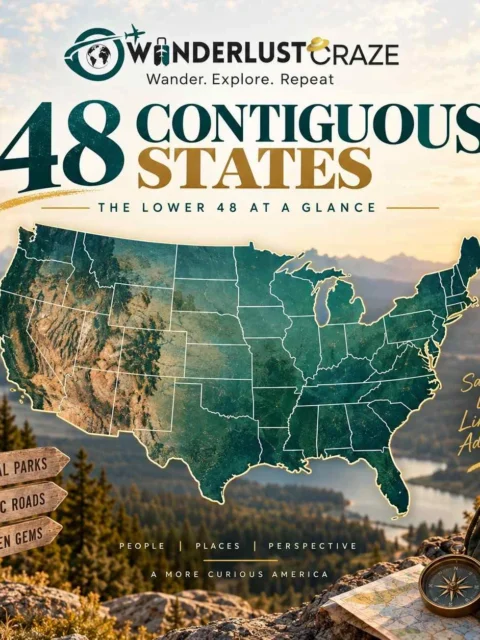
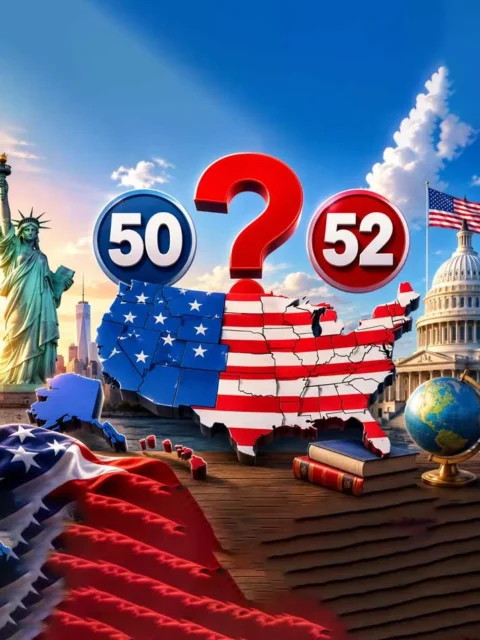
10. Does the USA Really Have 50 States, Not 52?
Yes. The United States has 50 states, not 51 or 52. The confusion usually comes from Washington, D.C., which is a federal district, and places like Puerto Rico, which is a U.S. territory rather than a state.
If you want the clean breakdown, Wanderlust Craze explains how many states are in the US with their regions and why the number causes so much confusion.
11. Was Yellowstone the World’s First National Park?
Correct. Yellowstone became the world’s first national park in 1872.
That makes it one of America’s most important travel ideas, not just one of its most famous parks. Geysers, bison, waterfalls, hot springs, and steaming earth all helped shape the way the world thinks about protecting wild places for everyone to experience.
You can experience the Yellowstone area in very different ways, from a half-day Yellowstone River rafting trip for something more adventurous to a full-day Yellowstone National Park tour from Bozeman if you would rather focus on the park’s major sights with a guide.
12. How Long Is the Grand Canyon? What Makes Him Among the Wonder of the World?
Grand Canyon stretches 277 miles, long enough to earn its spot among the 7 Wonders of the World. The modern Grand Canyon was largely carved by the Colorado River over roughly the past 5 to 6 million years, although parts of the river system are older.
If you want to experience the Grand Canyon beyond the viewpoints, there are several ways to explore it. You can take a South Rim Jeep tour, join a full-day Grand Canyon van tour, or make the journey part of the experience with the Grand Canyon Railway.
13. Death Valley Has the Lowest Point in North America
Badwater Basin in Death Valley National Park sits 282 feet below sea level, making it the lowest point in North America.
The place looks almost unreal: white salt flats, huge silence, mountain walls, and heat that can feel physical. It is beautiful, but it is also a landscape that asks for respect, water, and careful timing.
14. Does Alaska Have the Tallest Mountain in North America?
Yes. Denali rises to 20,310 feet in Alaska, making it the tallest mountain in North America.
Even from far away, Denali has a presence that makes the rest of the landscape feel quiet. Visiting Denali National Park is less about rushing from one viewpoint to another and more about tundra, wildlife, long distances, and the feeling of being very small in a very large place.
15. The Great Lakes Are So Big They Feel Like Inland Seas
The Great Lakes form the largest surface freshwater system on Earth, and they are so vast that many first-time visitors mistake them for oceans.
They bring beaches, lighthouses, ferries, islands, dunes, lake towns, and stormy horizons into the American travel story. If freshwater escapes are your kind of trip, WLC’s guide to the cleanest lakes in the US is a natural next stop.
16. Is Lake Superior the Largest Great Lake?
True. Lake Superior is the largest, deepest, and coldest of the Great Lakes.
It has a wild northern personality, with rocky shorelines, shipwreck stories, clear water, moody weather, forested edges, and views that feel much more like a sea than a lake.
17. Can You Find Tropical Beaches and Arctic Landscapes in One Country?
Yes. The United States stretches from tropical Hawaii and South Florida to Arctic and subarctic landscapes in Alaska.
That is one of the most fun things about traveling in the USA, and it is a popular choice for honeymoon planning. You can plan one trip around palm trees and another around glaciers, and both are still technically American vacations.
18. The Tallest Trees on Earth Grow in California
California’s coast redwoods are the tallest trees on Earth.
Walking under them can feel almost unreal because the forest changes your sense of scale. The trunks rise so high that you stop looking for the tops and simply stand there, a little quieter than before.
19. Is Mammoth Cave the Longest Known Cave System in the World?
Yes. Mammoth Cave National Park in Kentucky protects the world’s longest known cave system.
Above ground, the park looks green and gentle. Below ground, it opens into a hidden world of passages, chambers, darkness, and human history. It is a perfect reminder that not every American wonder stands above the horizon. Some are under your feet.
20. The Everglades Are Often Called a River of Grass
The Everglades are not a typical swamp. They are often described as a slow-moving “river of grass,” with water moving gently through sawgrass, mangroves, marshes, and subtropical wilderness.
For travelers, the Everglades are best experienced slowly. Boardwalks, airboats, kayaks, birds, alligators, and quiet patience are all part of the rhythm.
If you want an easier way to explore the wetlands without organizing everything yourself, Everglades tour with transportation is a convenient option for seeing the area as part of a guided experience.
21. Is Route 66 Still America’s Most Famous Road Trip?
Route 66 remains one of America’s most famous road-trip routes, even though the original highway has changed over time.
It began in 1926 as part of the early federal highway system and still carries a powerful sense of nostalgia. Think neon signs, diners, desert roads, vintage motels, old gas stations, and little towns that seem built for slow driving.
22. Was the Statue of Liberty a Gift From France?
Yes. The Statue of Liberty was a gift from the people of France to the United States.
That French connection gives the statue a story beyond its skyline fame. Seeing it from New York Harbor still feels moving because it represents arrival, freedom, friendship, and the kind of landmark that becomes personal even to people visiting for the first time.
A Statue of Liberty and Ellis Island tour in Fery is one of the easiest ways to experience both landmarks together, especially if you want guided context on the history behind them.
23. New York City Is Not the Capital of the USA
New York City may be America’s most famous city, but it is not the national capital. That title belongs to Washington, D.C.
The same mix-up happens at state level too, which is why our 50 states and capitals list is useful if you want to see every U.S. state alongside its official capital.
Still, New York has its own gravity. It feels like a capital of food, theatre, fashion, finance, skyline dreams, immigrant stories, and restless energy. That is why so many first-time visitors feel they have to start there.
24. Did the Golden Gate Bridge Once Set a World Record?
Yes. When the Golden Gate Bridge was constructed in 1937, it set the world record for the longest bridge span.
Even now, the bridge has a cinematic quality that numbers cannot fully explain. Fog, water, red-orange towers, city hills, and bay views make it one of the most photographed structures in the United States.
You can experience the Golden Gate Bridge from two very different perspectives, either on a Golden Gate Bay cruise for panoramic views from the water or by biking across the Golden Gate Bridge to Sausalito for a more active experience.
25. The Hollywood Sign Originally Advertised Real Estate
The Hollywood Sign did not begin as a movie symbol. It originally spelled “Hollywoodland” and advertised a real estate development.
Over time, the sign lost its final letters and became one of the world’s most recognizable entertainment icons. That is such a Los Angeles story: a temporary advertisement slowly turning into a global dream.
26. Did Mount Rushmore Really Take 14 Years to Carve?
Yes. Mount Rushmore was carved between 1927 and 1941, a period of 14 years.
The monument is famous for its four presidential faces, but the Black Hills around it also carry deep Native American history and meaning. So it is a landmark that deserves more than a quick photo stop. It is impressive, complicated, and tied to several layers of American memory.
27. The National Park Service Manages More Than 400 Sites
Many people talk about the 63 national parks, but the National Park Service manages more than 400 sites in total.
That includes national monuments, historic sites, battlefields, recreation areas, parkways, seashores, and more. So a “national park trip” in the USA can mean hiking through Yosemite, walking a civil rights trail, touring a historic home, or standing beside a protected coastline.
28. Are There Beautiful National Parks on the East Coast Too?
Yes. The East Coast has beautiful national parks, even though the American West often gets most of the attention.
Acadia, Shenandoah, Great Smoky Mountains, Everglades, Congaree, and Biscayne all show very different sides of the country.
29. American Skylines Are Recognizable Around the World
New York, Chicago, Seattle, San Francisco, Las Vegas, Miami, and Los Angeles all have skylines that many travelers recognize instantly.
Each one carries a different mood. New York feels vertical and electric. Chicago feels architectural and bold. Seattle has that soft mountain-and-water backdrop. Las Vegas glows like it refuses to sleep.
30. Why Are Small Towns Such a Big Part of American Travel?
Because small towns show a quieter, softer side of the USA that big cities cannot always capture.
Think main streets, diners, porches, local festivals, antique shops, lakefront cottages, mountain squares, courthouse lawns, and handmade signs outside family businesses. Sometimes the best stop on an American road trip is the one you almost drove past.
31. Barbecue Tastes Different Depending on Where You Are
Barbecue is not one single thing in America. Texas, Kansas City, Memphis, and the Carolinas all have their own styles, sauces, meats, smoke traditions, and local loyalties.
For travelers, barbecue is one of the tastiest ways to understand regional pride. Ask where to find the best barbecue in the wrong town and you may accidentally start a very passionate conversation.
32. Are New York Pizza and Chicago Deep Dish Really That Different?
Yes. New York pizza and Chicago deep dish are both pizza, but they feel like completely different meals.
New York slices are thin, foldable, fast, and street-friendly. Chicago deep dish is thicker, heavier, slower, and closer to a savory pie. It is a simple food fact, but it says a lot about how American cities make food traditions their own.
33. Pie Is a Serious Part of American Food Culture
Apple pie may be the famous phrase, but America’s pie culture goes much further.
Florida has key lime pie. The South loves pecan pie. Michigan is known for cherries. Pumpkin pie appears everywhere in fall. And in a small-town diner, a slice of pie can feel less like dessert and more like a tiny travel memory.
34. Why Is Seattle So Famous for Coffee?
Seattle is famous for coffee because the city helped shape modern American coffee culture, from major coffee brands to cozy independent cafés.
But Seattle is not only about coffee. It is also ferries, islands, markets, mountains, forests, rainy walks, and gray skies that somehow make everything feel more atmospheric. If you are planning a visit, WLC’s guide to the best time to visit Seattle can help you choose the right season.
Related Guide: What Time Is It In Seattle Right Now?
35. New Orleans Feels Like Nowhere Else in the USA
New Orleans has one of the most distinctive cultures in America, shaped by French, Spanish, African, Caribbean, and Southern influences.
You feel it in the music, food, architecture, festivals, street life, and the slow confidence of the city itself.
Gumbo, jazz, iron balconies, beignets, second lines, old cemeteries, and river air all make New Orleans impossible to mistake for anywhere else.
One of the most atmospheric ways to experience New Orleans is from the Mississippi River on a Steamboat Natchez harbor cruise, combining river views with a classic part of the citys history and character.
36. Did Jazz, Blues, Rock, Hip-Hop and Country All Grow From America?
Yes. Many globally influential music genres were born in, or deeply shaped by, the United States.
Jazz in New Orleans, blues in the Mississippi Delta and Chicago, country in the South, rock and roll across several American cities, and hip-hop in the Bronx all give travelers a musical map of the country.
37. Thanksgiving Is One of America’s Busiest Travel Times
Thanksgiving is one of the busiest travel periods in the United States because millions of people fly or drive to be with family.
For visitors, it can be a beautiful cultural moment, with parades, football, family meals, and early holiday lights. It is also a time to book early, expect crowded airports, and treat long-distance travel with patience.
38. Is Halloween Really a Big Deal in the USA?
Yes. Halloween is a major seasonal event in many American neighborhoods, towns, and cities.
It is not just costumes on one night. October often brings decorated porches, pumpkin patches, haunted houses, corn mazes, ghost tours, fall festivals, and trick-or-treating streets that feel like little outdoor parties.
39. State Fairs Are a Classic American Tradition
State fairs bring together food, farming, rides, animals, concerts, competitions, local pride, and deep-fried everything.
They are wonderfully American because they mix spectacle with community. If you want to understand a state beyond its postcard attractions, a fair can tell you a lot in one noisy, colorful afternoon.
40. Why Are Diners So Iconic on American Road Trips?
Diners are iconic because they feel made for the open road: coffee refills, pancakes, burgers, booth seats, pie cases, neon signs, and menus that somehow have everything.
They are not always fancy, and that is part of the charm. A good diner breakfast can make a long driving day feel easier, warmer, and a little more cinematic.
41. Alaska Is Bigger Than Most People Can Imagine
Alaska is the largest U.S. state by far, and it is so large that normal state comparisons start to feel silly.
For travelers, that size means glaciers, fjords, national parks, wildlife, remote towns, northern lights, long drives, ferry routes, and journeys that require more planning than a simple city break.
42. Is Rhode Island Really the Smallest State?
Yes. Rhode Island is the smallest U.S. state by area.
But it still manages to fit in beaches, sailing culture, colonial history, seafood, mansions, and the creative city of Providence. It is proof that a state does not need to be huge to have a strong travel personality.
43. California Can Feel Like Several States in One
California has beaches, redwood forests, deserts, snowy mountains, vineyards, big cities, surf towns, national parks, and theme parks.
From Yosemite and Death Valley to San Francisco, Napa Valley and the Pacific Coast Highway, many of the most beautiful places in California feel like completely different trips packed into one state.
44. Is Arizona Famous for More Than the Grand Canyon?
Yes. The Grand Canyon may be Arizona’s biggest icon, but the state has far more to offer.
Sedona’s red rocks, Monument Valley views, desert drives, saguaro cactus landscapes, Native American heritage, and golden sunsets all give Arizona its larger personality.
45. Michigan Touches Four of the Five Great Lakes
Michigan touches Lake Superior, Lake Michigan, Lake Huron, and Lake Erie, giving it one of the strongest freshwater identities in the USA.
Between its lake towns, dunes, islands, lighthouses, forests, and Upper Peninsula escapes, Michigan is one of the best reminders that a beach trip does not always need an ocean.
46. Utah Has Five National Parks
Utah has five national parks: Zion, Bryce Canyon, Arches, Canyonlands, and Capitol Reef.
Together, they make the state one of America’s great outdoor playgrounds. Red rocks, arches, hoodoos, cliffs, desert roads, slot canyons, and dark skies make Utah feel like a giant open-air gallery.
47. Is St. Augustine the Oldest European-Founded City in the Continental U.S.?
Yes. St. Augustine, Florida, is widely recognized as the oldest continuously occupied European-founded settlement in the continental United States.
That makes it a very different side of Florida from the usual theme parks and beach resorts. Its Spanish colonial streets, old fort, courtyards, churches, and coastal setting give the state a deeper historic layer.
48. New Mexico Has One of America’s Most Unique Cultural Blends
New Mexico is shaped by Native American, Hispanic, Spanish colonial, Mexican, and Anglo influences.
You feel that mix in the food, art, adobe architecture, desert churches, Pueblo communities, chile culture, markets, and mountain towns. Santa Fe and Taos especially feel unlike anywhere else in the country.
49. Some of America’s Most Beautiful States Are Not Always the Most Obvious
Hawaii, Alaska, California, and Colorado get plenty of attention, but states like Maine, Vermont, Washington, New Mexico, Kentucky, Montana, Oregon, and Michigan can be just as unforgettable in their own way.
If you are narrowing down where to go next, WLC’s guide to the most beautiful states in the US is a natural place to keep planning.
50. The Most Fun Fact About the USA Is That One Trip Is Never Enough
The USA is too big, too varied, and too surprising to understand in one visit.
You can plan a national park trip, a city break, a lake weekend, a food route, a small-town loop, a beach holiday, a romantic escape, or a coast-to-coast road trip and still barely scratch the surface. Maybe that is the real magic of America. There is always another state, another roadside stop, another view, another local dish, and another story waiting somewhere down the road.
Best USA Facts for Travelers
If you are reading these facts while planning a trip, a few of them are especially helpful.
- For first-time visitors: New York, Washington, D.C., California, Florida, Las Vegas, and a national park route are easy starting points.
- For nature lovers: Utah, Arizona, Alaska, Hawaii, California, Wyoming, Montana, and Washington offer some of the country’s biggest scenery.
- For road trips: Route 66, the Pacific Coast Highway, Utah’s national parks, New England in fall, and the Great Lakes are strong choices.
- For food lovers: New Orleans, Texas, Chicago, New York, Maine, New Mexico, Kentucky, and California all have strong regional flavors.
- For couples: Savannah, Charleston, New Orleans, Sedona, San Francisco, coastal Maine, and the Hawaiian islands all work beautifully. WLC’s guide to the most romantic cities in the US can help with that kind of trip.
FAQs About Fun Facts About the USA
What are 5 fun facts about the USA?
Five fun facts about the USA are that the current 50-star flag has a high school project story, more than 350 languages are spoken in American homes, the U.S. records more tornadoes than any other country, Yellowstone was the world’s first national park, and the Library of Congress is the world’s largest library.
What is the most surprising fact about the USA?
One of the most surprising facts about the USA is that mail is still delivered by mule to Supai, a remote community inside the Grand Canyon. It is one of the most unusual postal routes in the country.
How many states are in the USA?
The USA has 50 states. Washington, D.C. is a federal district, and Puerto Rico is a U.S. territory, which is why some people mistakenly think the country has 51 or 52 states.
What is the USA famous for?
The USA is famous for national parks, road trips, New York City, Hollywood, the Grand Canyon, the Statue of Liberty, jazz, blues, country music, barbecue, major sports, technology, and its mix of landscapes and cultures.
What makes the USA unique for travelers?
The USA is unique for travelers because one country includes tropical islands, Arctic landscapes, deserts, rainforests, lakes, mountains, beaches, canyons, historic cities, small towns, and famous road trips.
Is the Grand Canyon one of the Seven Wonders of the World?
The Grand Canyon is widely listed as one of the Seven Natural Wonders of the World, not one of the New Seven Wonders of the World. It remains one of the most famous natural landmarks in America.
Final Thoughts
The best fun facts about the USA are not just random pieces of trivia. They show how strange, wide, creative, dramatic, and layered the country really is.
There are places where mail still travels by mule, cities where hundreds of languages fill the streets, parks that changed the way the world protects nature, and landscapes that make maps feel too small.
So yes, America is famous for its big icons. But often, the little facts are what make you want to look closer.