6 Clearest and Cleanest Lakes in the US
In a country with over 500,000 stunning lakes, it’s a no-brainer to say that many a vacation each summer is going to center around one of America’s beautiful inland bodies of water. Those lakes aren’t evenly distributed across the country, though, and lake counts vary significantly from one U.S. state to another, depending in part on how each state defines and counts its lakes. But sheer numbers don’t tell the whole story. Water clarity, pollution levels, surrounding development, and conservation efforts can make a major difference in how clean a lake actually is. That’s why we’ve looked beyond appearance alone to highlight some of the cleanest lakes in the United States.
If you need a bit of help figuring out where to go on this year’s lake escape, good news! We’ve got the scoop on the six cleanest lakes and all the info you need to help make your summer laze by the lake a healthy and happy one.
How We Curate This Guide
We selected these lakes using published clarity and water-quality measurements from government agencies, universities, and established lake-monitoring programs. Where available, we reviewed indicators such as Secchi depth, turbidity, and phosphorus. Secchi depth and turbidity mainly describe water transparency, while phosphorus provides useful context about nutrient conditions that can influence algal growth.
Because the figures come from different years, sampling locations, research methods and source agencies, we do not combine them into a single scientific cleanliness score or treat the lakes as a standardized national ranking. Instead, this guide highlights six U.S. lakes with well-documented evidence of exceptional clarity or notable water-quality conditions.
Our editorial team reviewed the figures against primary and authoritative sources, including the U.S. Environmental Protection Agency, Environment and Climate Change Canada, state environmental agencies, UC Davis Tahoe Environmental Research Center, and the National Park Service. The measurement period and monitoring source are identified alongside the data, and where figures are not directly comparable, we say so rather than assigning an estimated score.
| Lake | Best verified clarity measure | Nutrient measure | Measurement period |
|---|---|---|---|
| Lake Superior | 54 ± 11% of nearshore rated good for Secchi clarity | Offshore TP: 2.5 µg/L | 2015 / 2019 |
| Lake Chelan | Secchi: 12.1 ± 0.5 m | TP: 3.01 ± 0.18 µg/L | 1989 baseline |
| Lake Hartwell | Secchi: 1.1–3.05 m at SV-840 | TP: 0.01 mg/L at SV-840 | 2023 |
| Lake of the Ozarks | Secchi: ~2.0–2.1 m near dam | TP: 20 µg/L long-term mean | 1980–2014 |
| Lake Tahoe | Secchi: 69.2 ft / 21.1 m | THP: 2.12 µg/L | 2025 / 2024 |
| Crater Lake | Secchi: 31 m / 102 ft average | Not directly comparable | Long-term NPS record |
Crater Lake nutrient: NPS monitors lake chemistry, including phosphorus, but we did not find a recent whole-lake phosphorus average that could be compared fairly with the other lakes in this table.
1. Lake Superior
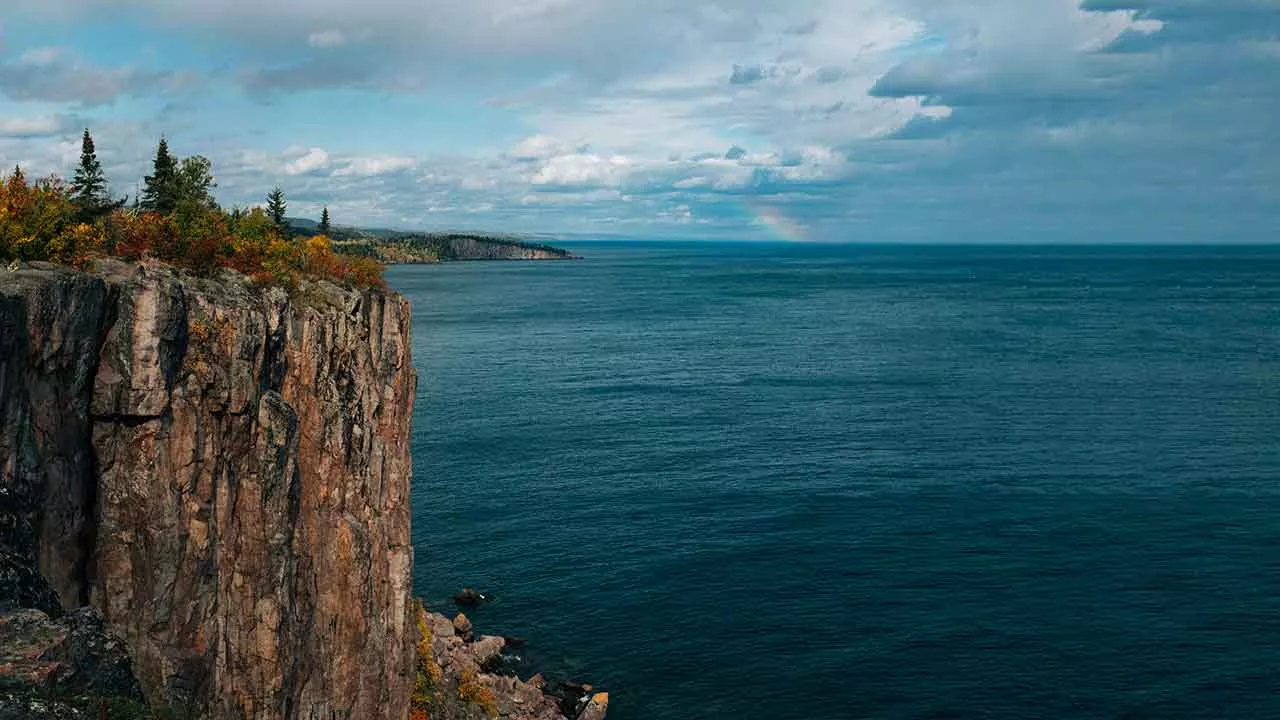
Lake Superior earns its place here through scale as well as water quality. Covering roughly 31,700 square miles, it is the largest freshwater lake in the world by surface area and contains about 10% of the world’s surface fresh water.
Its enormous size does not prevent it from maintaining very low nutrient levels. According to Environment and Climate Change Canada’s Great Lakes phosphorus monitoring, Lake Superior had a spring offshore total phosphorus concentration of 2.5 µg/L in 2019, below the lake’s 5 µg/L water-quality objective.
Clarity monitoring gives another reason Superior belongs in a discussion of notably clear U.S. lakes. In the Lake Superior Lakewide Action and Management Plan, 54 ± 11% of the assessed nearshore area was rated in good condition for Secchi clarity in the 2015 assessment.
Those measurements are more useful than assigning the lake a homemade “cleanliness score” because they show the conditions that scientists and environmental agencies actually monitor.
Lake Superior is cleaner than many water bodies, but it has also been exposed to misuse and some levels of pollution through the years. Deforestation, industrial discharges, and municipal waste have all contributed to the decline in water quality. According to the Environmental Protection Agency, the estimated retention time is 191 years, meaning water-soluble pollutants introduced today could persist for almost 200 years. Summer days on the Western shore of Lake Superior are longer as the sun sets more than 35 minutes later than the Sourthern shore of the lake.
Lake Superior is very large, and half of it is in Canada, so the lake is kept clean with the aid of a coalition of the US EPA and Environment & Climate Change Canada as well as a number of environmental groups and agencies at the state level. This allows the lake’s 3.5 million annual visitors to enjoy boating, fishing, dogsledding, exploring the cities along the coastline of Minnesota, Wisconsin, and Michigan, and of course plenty of opportunities to hunt Minnesota’s state gem, the Lake Superior Agate. There’s lots to do all year round, but unsurprisingly, the most popular times to visit are summer for the swimming and hiking options, and autumn for the absolutely breathtaking color displays in the woodlands around the lake.
If your trip takes you to Michigan’s side of the lake, there are plenty of other crystal-clear waters worth exploring. Beyond the Great Lakes shoreline, the state is home to dozens of pristine inland lakes known for their exceptional clarity and natural beauty. For more inspiration, see our guide to the cleanest lakes in Michigan.
- Surface Area: 31,700 square miles
- Length: 350 miles, east to west
- Maximum Depth: 1,333 feet
- Elevation: 600 feet above sea level
- Water Volume: 2,900 cubic miles
2. Lake Chelan
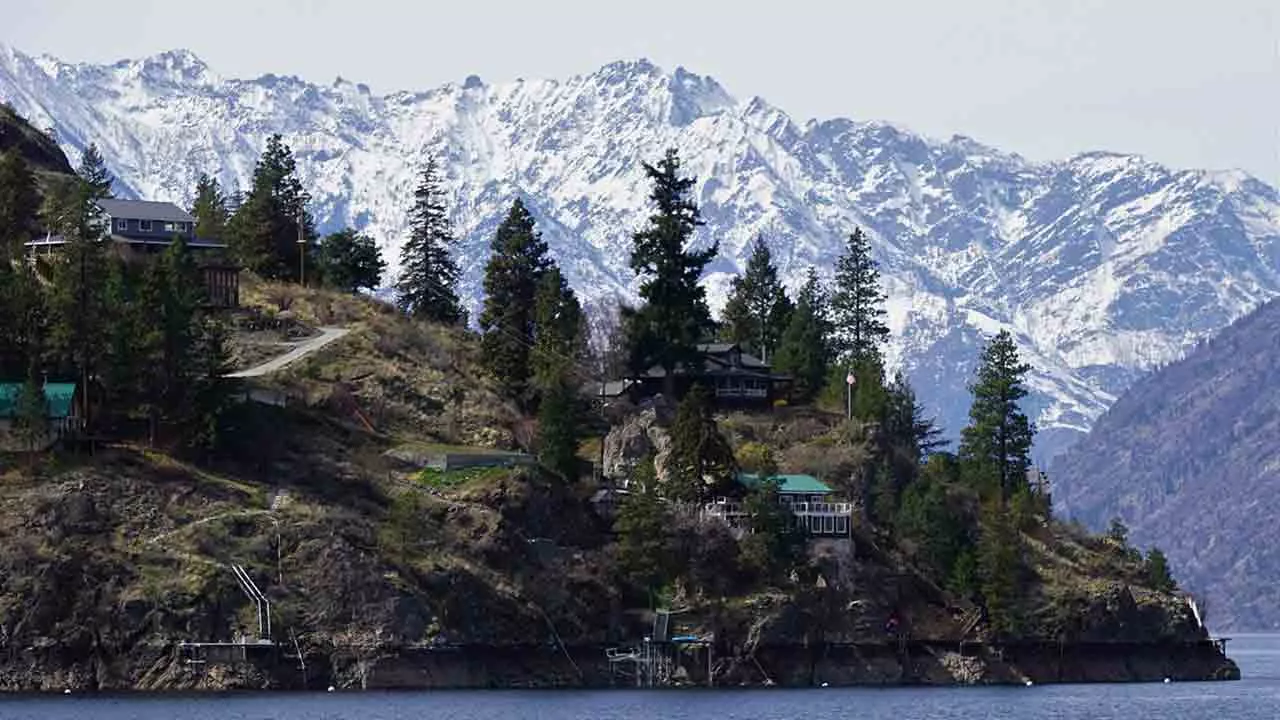
Lake Chelan is a long, narrow freshwater lake stretching through Washington’s Cascade landscape. It stands out because one of the lake’s detailed baseline studies recorded both exceptional transparency and very low nutrient concentrations.
A Washington State water-quality assessment reproduced by the U.S. EPA reported an average Secchi depth of 12.1 ± 0.5 metres, total phosphorus of 3.01 ± 0.18 µg/L, and dissolved oxygen of 10.6 ± 0.1 mg/L.
These are historical baseline measurements from 1989 rather than present-day readings, so we identify the monitoring period rather than presenting them as current conditions.
At nearly 1,500 feet at its deepest point, Chelan combines remarkable depth, low nutrient concentrations and strong documented clarity with a dramatic mountain setting.
The lake is so long and surrounded by so much of the Cascade mountain range, that many note that it closely resembles a Norwegian fjord–so if you can’t run off to Norway anytime soon, you might find that a boat tour of Lake Chelan could help ease any pining for the fjords you may be experiencing.
It’s an especially ideal destination for beginner travelers, thanks to the gorgeous scenery and there’s a large number of recreational opportunities available–you can strap on your best boots and go hiking, get in some good fishing, rent a boat or hire a guide for a great boat tour… the possibilities are almost endless. Beware, though, it all might just set the bar rather high for your future travels!
The small town of Chelan at the lake’s southern tip is an excellent starting point for your Lake Chelan journey, which the Chamber of Commerce recommends that you undertake in September for the gorgeous weather and smaller tourist crowds. There are plenty of hotels and motels to stay in–the charmingly rustic Lake Chelan Motel is a popular choice with the Lake Chelan Valley’s 2 million annual visitors and a number of truly excellent restaurants ranging from fine dining at Albatross to the nearest thing America can call a national dish, juicy burgers and hot crisp fries at the Lakeview Drive-in.
Take a slow walk by the water, hop on a boat for the sunset, or grab dinner with the mountains as your backdrop. When you do, you’ll see why so many newlyweds flock here once the wedding chaos ends. Lake Chelan is one of the best honeymoon spots in the country in late August or November as it gives you peace, gorgeous views, and a relaxed vibe.
Read Also: Most Beautiful Sunsets Around the World
- Surface Area: 52.1 square miles
- Length: 50.5 miles, north to south
- Maximum Depth: 1,486 feet
- Elevation: 1,100 feet above sea level
- Water Volume: 4.66 cubic miles
3. Lake Hartwell
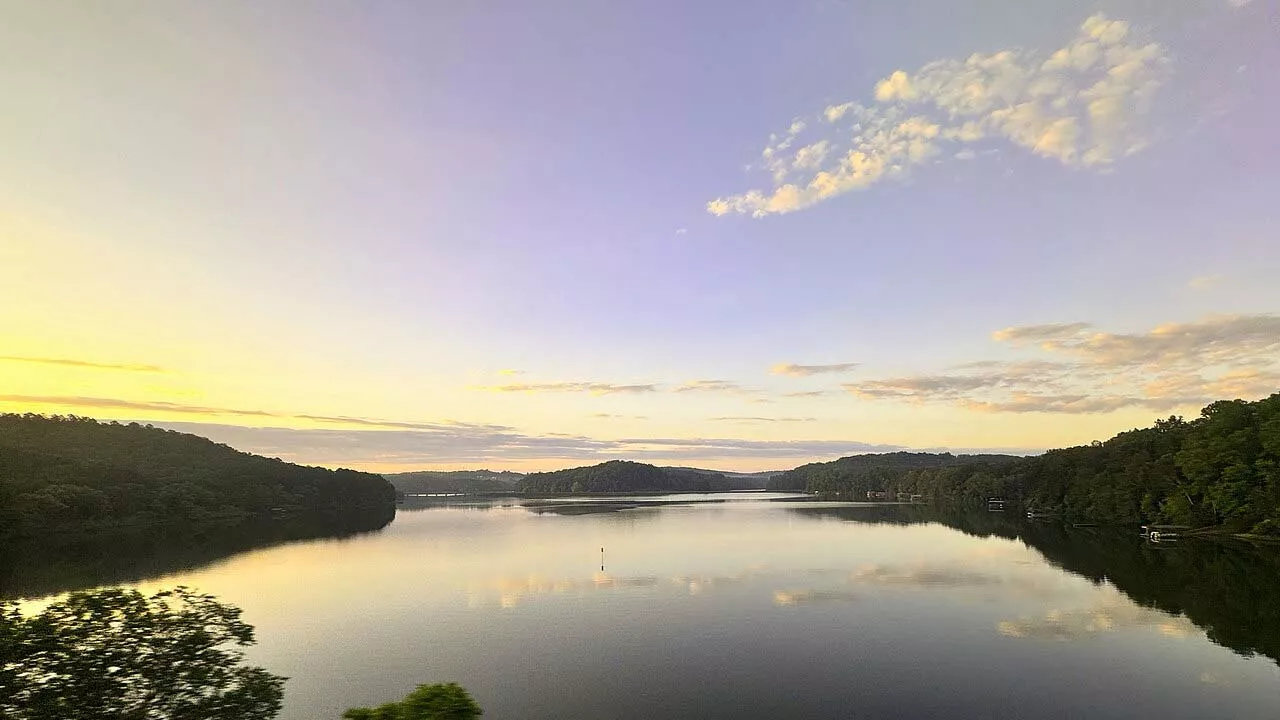
Lake Hartwell, on the Georgia–South Carolina border, is a reservoir rather than a naturally formed alpine or volcanic lake. Its water conditions vary across different arms and monitoring locations, which makes site-specific reporting especially important.
In the South Carolina Department of Environmental Services 2023 lake monitoring report, open-lake station SV-840 recorded Secchi depths ranging from 1.1 to 3.05 metres between April and October. Average surface total phosphorus at the same station was reported at 0.01 mg/L.
Those measurements describe that monitoring location, not a whole-lake average. Identifying the station matters because Hartwell is a large and complex reservoir, and water conditions can differ substantially from one part of the lake to another.
Its extensive shoreline, parks and well-known fishery still make it a popular recreation lake, but the evidence is better presented through actual monitoring data than through a generic pollution score.
Since Lake Hartwell is fairly wide-ranging, there are a number of parks and recreation areas on its shores that make perfect pausing points during a road trip. Sadlers Creek State Park, Singing Pines Recreation Area, and Payne’s Creek Campground offer great views, easy lake access, and tons of nature activities–perfect whether you’re a traveling family or a solo explorer.
With so much to do, is it any wonder that over nine million visitors make their way to Lake Hartwell each year? Head there in September to enjoy less-scorching temps and quieter waters
- Surface Area: 56,000 acres
- Length: About 50 miles
- Maximum Depth: 185 feet
- Elevation: 660 feet above sea level
- Water Volume: 2,550,000 acre-feet
4. Lake of the Ozarks
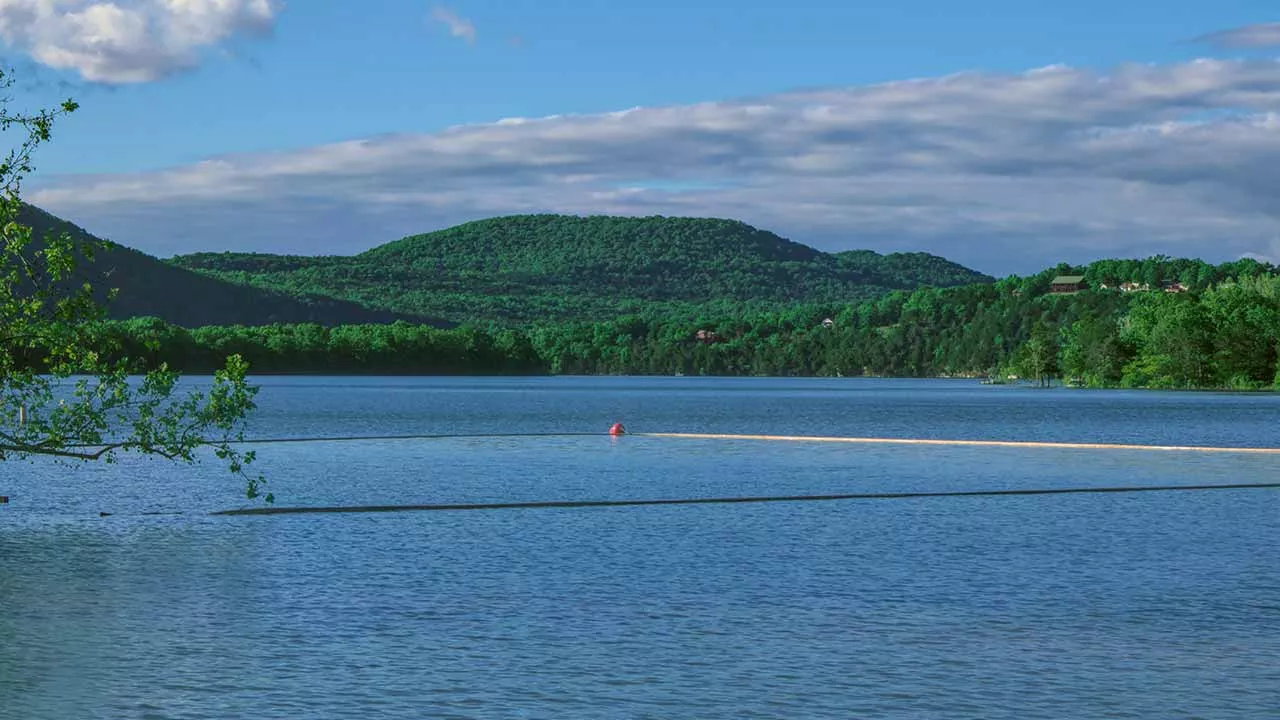
Lake of the Ozarks is one of Missouri’s most recognisable reservoirs, with long branching arms created by the impoundment of the Osage River and its tributaries.
Because it is heavily used and surrounded by substantial development, its long monitoring history provides useful context. A long-term University of Missouri study of Lake of the Ozarks found average Secchi transparency of roughly 2.0–2.1 metres near Bagnell Dam over the 1980–2014 period, alongside a long-term mean total phosphorus concentration of about 20 µg/L.
Those figures should not be interpreted as proving that Lake of the Ozarks is “fourth cleanest” nationally. They instead provide documented evidence of conditions at a well-monitored part of the lake over several decades.
The lake remains a major destination for boating, fishing, camping and family trips, while watershed and shoreline programs continue to address the pressures created by development and heavy recreational use.
Another man-made marvel of engineering, Lake of the Ozarks is a spiky, snakey vestige of multiple river tributaries in Northwestern Missouri; it’s so twisty and winding that it’s commonly called The Missouri Dragon.
- Surface Area: 54,000 acres
- Length: 93 miles
- Maximum Depth: 130 feet
- Elevation: 659 feet above sea level
- Water Volume: 1,927,000 acre feet
5. Lake Tahoe
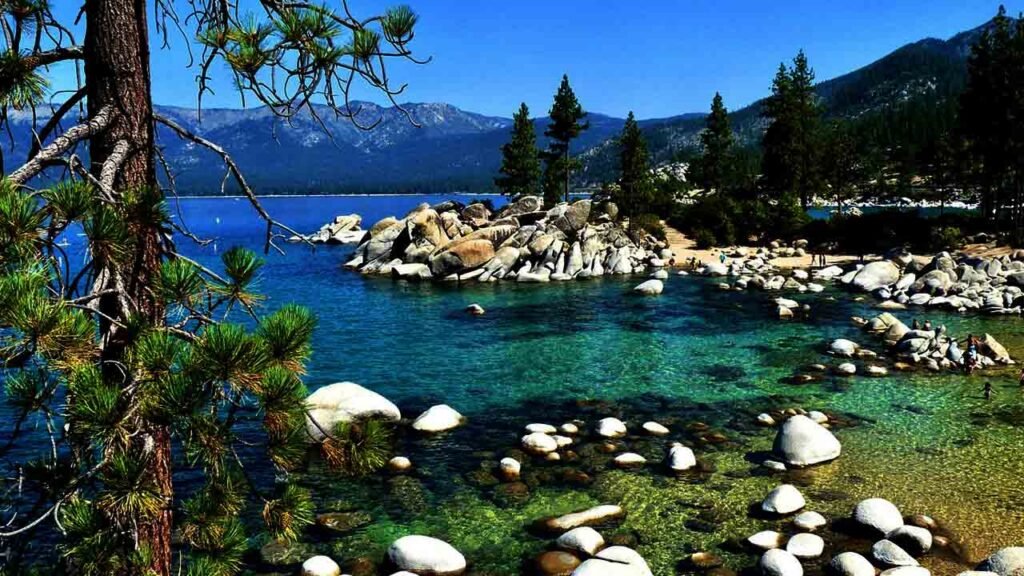
Lake Tahoe’s famous transparency is measured scientifically rather than judged by appearance alone.
According to the UC Davis Tahoe Environmental Research Center’s 2025 clarity report, the lake recorded an annual average Secchi depth of 69.2 feet in 2025, compared with 62.3 feet in 2024.
The increase from one year to the next should not be read as a full recovery. UC Davis describes Tahoe’s long-term clarity trend as broadly plateaued, and the 2025 result was not statistically different from recent years. The long-term restoration reference remains 97.4 feet, based on the average recorded between 1967 and 1971.
Nutrients also form part of Tahoe’s water-quality story. UC Davis reported a 2024 volume-weighted annual average total hydrolyzable phosphorus concentration of 2.12 µg/L, a measurement representing phosphorus available for algal growth.
Tahoe therefore remains exceptionally clear, but it is better described through measured Secchi depth and nutrient data than with claims that it is “99.994% pure” or definitively the second-clearest lake in the country.
Slung along the California-Nevada border, high in the mountains, Lake Tahoe’s clear blue water and dramatic alpine setting make it one of the most beautiful places in California. Thousands of skiing enthusiasts make the trek here each year to hit the slopes at the area’s 20+ ski resorts, where the snow is among the best in the region. But really intrepid winter bunnies can even try their hand at rowing a boat in the lake in the chilly months!
Lake Tahoe does not normally freeze over completely because of its enormous depth and heat-storage capacity, although ice can form in shallow shoreline areas during cold weather, so year-round rowing is possible… but not easy; you’ll certainly need to pack your warmest winter gear for this adventure!
- Surface Area: 216 square miles
- Length: 22 miles
- Maximum Depth: 1,645 feet
- Elevation: 6,225 feet above sea level
- Water Volume: 36 cubic miles
Read Also: Best Babymoon Destination in the USA
6. Crater Lake – Oregon

Crater Lake in southern Oregon is one of the most remarkable entries on the list of the cleanest lakes in the United States. Famous for its deep blue color and exceptional clarity, this natural lake sits inside the collapsed caldera of Mount Mazama and is surrounded by the dramatic scenery of Crater Lake National Park.
Crater Lake’s remarkable clarity is supported by one of the strongest long-term monitoring records on this list. The National Park Service’s Crater Lake research program reports an average Secchi disk reading of about 102 feet (31 metres), with individual observations reaching substantially deeper under exceptional conditions.
The lake has no rivers flowing into or out of it. Its water comes primarily from rain and snowfall, limiting the sediment that entering streams would otherwise carry into the basin.
That combination of great depth, limited external sediment input and long-term monitoring helps explain Crater Lake’s intense blue appearance and exceptional water transparency.
The lake is particularly impressive for its water clarity. Under the right conditions, objects can be seen more than 100 feet below the surface. Its combination of clear water, limited sediment, and pristine surroundings gives Crater Lake its famous intense blue appearance.
There’s plenty to do around the lake beyond admiring the scenery. Rim Drive provides spectacular viewpoints, while hiking trails, overlooks, and seasonal boat tours offer different ways to experience the area. Summer and early fall are especially popular for sightseeing, hiking, and photography, although some roads and facilities close during the snowy winter months.
With its exceptional clarity, incredible depth, and volcanic landscape, Crater Lake is easily one of the most beautiful and naturally pristine lakes in the country.
- Surface Area: 4,900 acres
- Length: About 6 miles
- Maximum Depth: 1,943 feet
- Elevation: 6,178 feet above sea level
- Water Volume: About 4.9 trillion gallons
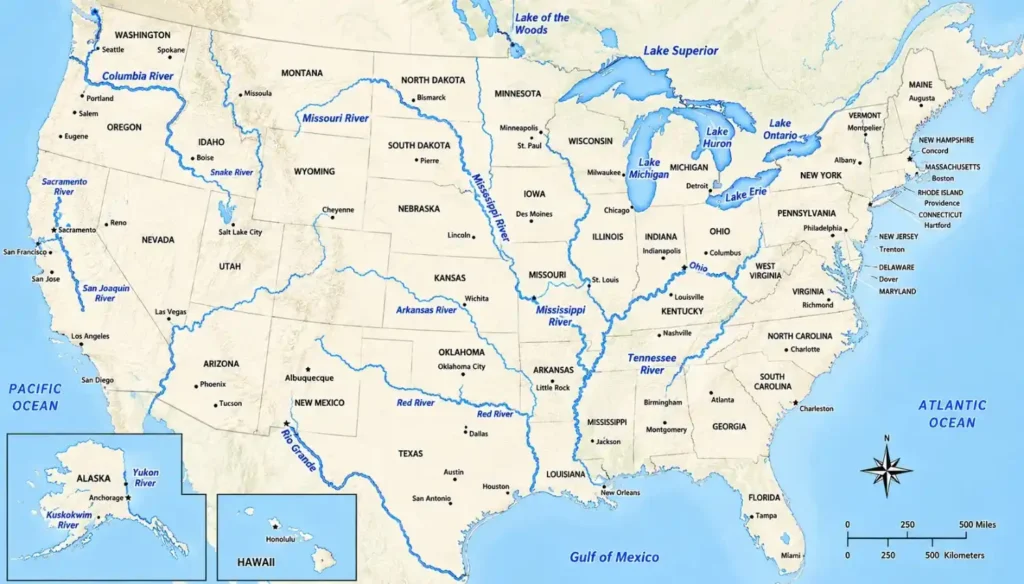
Map of the United States with Lakes and Rivers
Frequently Asked Questions
There is no single official nationwide ranking that identifies one lake as definitively the cleanest lake in the US because water quality can be measured through clarity, nutrients, dissolved oxygen, contaminants and other indicators.
Among the lakes in this guide, Lake Superior stands out for very low offshore phosphorus levels and strong documented nearshore water quality, while Crater Lake and Lake Tahoe are especially notable for exceptional Secchi-depth clarity. That is why we compare the lakes using their published measurements rather than assigning one universal cleanliness score.
That’s Crater Lake, which at just under 2,000 feet of depth is still only the tenth deepest lake in the world. Lake Baikal in Russia sits pretty at number one with over twice the depth.
Despite the name, alpine lakes don’t only mean lakes located in the Alps. It refers to high-altitude, often mountainous and glacial lakes–and in America; Lake Tahoe reigns supreme in this category with 122 million acre feet of water.
Lake Superior stretches approximately 350 miles (563 km) from west to east, making it the largest of the Great Lakes by surface area. At its widest point, the lake spans about 160 miles (258 km) and features an impressive shoreline ranging from roughly 2,726 to 2,826 miles, including its islands and inlets.
Some of the prettiest lakes in the US include Lake Tahoe, Crater Lake, and Lake Powell, all known for their crystal-clear water, stunning mountain scenery, and vibrant blue colors.
Among the measurements used in this comparison, Crater Lake has the deepest published average Secchi reading at about 102 feet (31 metres). Lake Tahoe’s 2025 annual average was 69.2 feet, although the two figures come from different agencies, research studies, years, sampling locations and measurement methods and should not be treated as a standardized head-to-head ranking.