What Two Days in Toronto Actually Feels Like
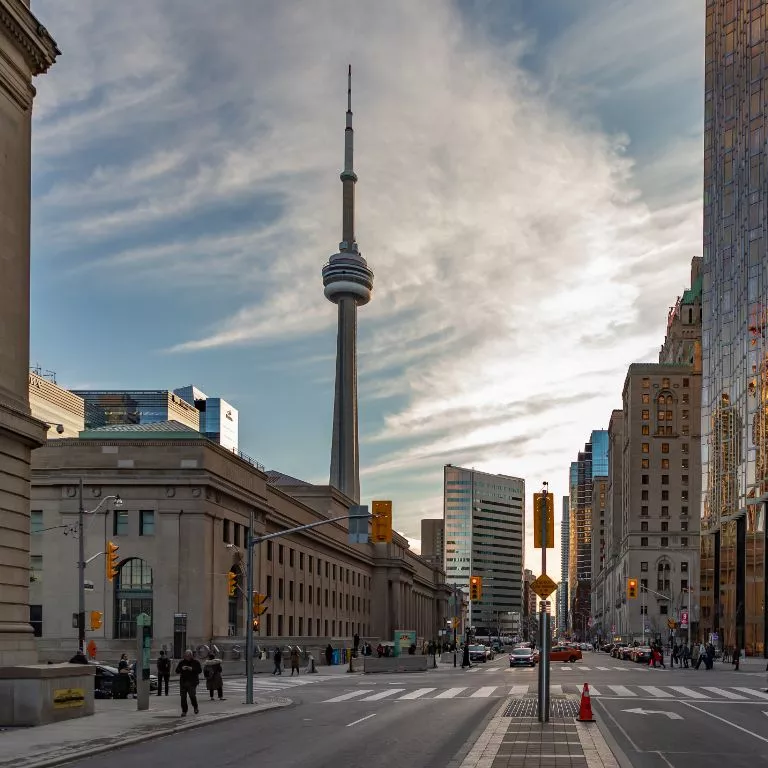
Toronto gets reduced to a punchline about politeness so often that the city itself rarely comes up in conversation. Ask five people what they know about it and at least three will mention manners, one will mention the CN Tower, and none of them will have anything to say about what the place is actually like to walk around in for a weekend. That gap between reputation and experience is the whole story.
Planning Your Two Days in Toronto
Toronto is easy to explore in a short visit if you plan your time around neighborhoods rather than trying to see everything at once. A little thought about where you stay, how you get around, and which areas you want to experience can make two days feel much more manageable
Two days are enough to get a genuine feel for central Toronto, particularly if you stay near the downtown core and group your stops by neighborhood. A practical short visit can combine St. Lawrence Market and Old Town, the Distillery District, Kensington Market, the waterfront and the Toronto Islands, with time left for Toronto’s famously varied food scene. You will not cover the whole city, but you can experience several parts that feel quite different from one another.
| Area | Best for | Rough time to allow |
|---|---|---|
| St. Lawrence Market & Old Town | Food, history and an easy starting point | 1.5-2.5 hours |
| Distillery District | Historic architecture, galleries and cafés | 1.5-2 hours |
| Kensington Market | Wandering, independent shops and food | 2-3 hours |
| Waterfront | Skyline views and a change of pace | 1-2 hours |
| Toronto Islands | Beaches, paths and skyline views | Half a day |
One useful bit of context before you start: Toronto was officially incorporated as the City of Toronto on March 6, 1834. Before that, the settlement was known as York, after it had been founded in 1793. The City of Toronto Archives records both dates, which helps explain why the modern downtown contains such a strange mix of nineteenth-century streets and much newer towers.
1. The City Rearranges Itself Faster Than the Map Suggests
Most first-time visitors book something downtown without much strategy, since most of the hotels in Toronto cluster within a few blocks of each other near the harbourfront and the financial district, and that turns out to be the right instinct almost by accident.
For two days, location matters more than luxury. A hotel near Union Station, the Financial District or the waterfront puts you within walking distance of several parts of the city, while a subway or streetcar can take you further afield when your feet give up.
Twenty minutes on foot in any direction changes the entire shape of the trip. Head north from Union Station, and you’re in the glass canyon of the financial core, all wind tunnels and lunch crowds. Cut west instead and within ten blocks you’re standing in Kensington Market, where the buildings are two stories tall, the paint is peeling on purpose, and a vintage shop sits next to a Jamaican patty counter next to a shop that sells only vinyl. There are so many different moods in Toronto, and they can often switch at the corner.
That density is what makes two days feel workable instead of rushed. A visitor with a single weekend can experience four or five genuinely different parts of the city without spending much of the trip in transit.
2. Grid Logic Makes the City Easier Than It Looks
Toronto’s central streets are easier to orient yourself around than the map initially suggests. Queen, King, Dundas and Bloor are useful reference points, and once you’ve got a few of them in your head, the downtown core becomes much less intimidating. Streetcars run along several of the main east-west routes, while the subway is useful when the distance gets longer.
That’s more important than it sounds. A two-day trip can burn a surprising amount of time on logistics, and Toronto is much more enjoyable when that time is spent walking, eating, or looking at something rather than working out which direction you’re going.
3. Getting Around Takes Less Time Than You Expect
Downtown Toronto is one of those places where walking often beats over-planning. The subway is useful for longer jumps, while streetcars make sense when you’re moving along Queen, King, Dundas or College. The catch is traffic: a journey that looks short on the map can take longer than expected at street level. For a two-day visit, it’s usually better to group things by neighborhood than to zigzag across the city.
4. The Harbourfront Does Something Most Waterfronts Don’t
A lot of cities treat their waterfront as scenery. Toronto’s does double duty as an actual departure point, since the ferry to the Toronto Islands leaves from the Jack Layton Ferry Terminal near the foot of Bay Street. The crossing is short, but the view back towards the skyline makes the trip worthwhile.
Ferries run frequently through the warmer months, though the ticketing and schedule information is worth checking in advance, since wait times at the terminal can stretch well past an hour on a summer weekend. Once you’re on the Islands, the atmosphere changes quickly. There are no cars, far less traffic noise, plenty of paths and beaches, and a constant view back towards the skyline.
The important thing is not to treat the Islands as a quick photo stop. Once you’re over there, the temptation is to stay: walk the paths, hire a bike, find the beach, and turn around occasionally to look back at the skyline. If you only have two days, give the trip its own block of time rather than trying to squeeze it between two other attractions.
The Islands are also more walkable than they first appear. The City describes them as a collection of islands connected by pedestrian-friendly multi-use trails. Centre Island and Ward’s Island are about 2.9 km apart, which takes roughly 35 minutes to walk, while Centre Island and Hanlan’s Point are about 3.9 km apart.
5. Kensington Market and the Distillery District Aren’t Interchangeable
It’s tempting to lump Toronto’s historic neighborhoods together into one afternoon, but Kensington Market and the Distillery District want different kinds of attention. Kensington rewards wandering without a plan, ducking into whichever doorway looks interesting, eating standing up, doubling back down a street you already walked.
The Distillery District rewards the opposite instinct: slower, more deliberate, better suited to an afternoon with nowhere else to be. The Distillery District feels so different from the streets around it. The site began as Gooderham & Worts in 1832 and developed into a major whisky-producing complex. The surviving buildings form one of the largest collections of Victorian industrial architecture in North America, which is why walking through the district feels more like entering an old industrial settlement than another downtown shopping area. Trying to do both in a single stretch tends to flatten them into the same experience, when the whole point is that they aren’t.
6. Don’t Skip St Lawrence Market
If Kensington is where Toronto feels most improvised, St Lawrence Market gives you a better sense of its older, more established side. St Lawrence Market has been part of Toronto’s public-market history since 1803. The original market buildings changed over time, including a brick structure that replaced the first wooden building in 1831 and a rebuilding after the Great Fire of Toronto in 1849. That history gives the area a little more weight than the average food hall, and it is one reason the market works particularly well as a starting point for exploring Old Town. It’s an easy way to connect several parts of the city without spending the morning traveling between them.
If you’re hungry, this is also where to try a peameal bacon sandwich, one of the market’s signature foods.
| Place | Historical detail | Why it works on a two-day visit |
|---|---|---|
| St. Lawrence Market | Public market history dates to 1803 | Easy morning stop with food and nearby Old Town streets |
| Distillery District | Gooderham & Worts began on the site in 1832 | Compact historic area that rewards slow exploration |
| Kensington Market | Shaped by successive immigrant communities over more than a century | Best experienced on foot without a rigid itinerary |
| Toronto Islands | Island park reached by City ferry from downtown | Gives you a quieter contrast to the urban core |
7. Where the Restaurant Scene Actually Delivers
Toronto’s reputation for food diversity sounds like a tourism slogan until you start eating your way around the city. In a single afternoon, you can go from a Jamaican patty shop to a Filipino bakery to dumplings in Chinatown without feeling as though you’ve deliberately constructed a food tour. The point isn’t novelty; these are neighborhoods where those cuisines are part of everyday life.
8. The Bits That Can Catch You Out
Toronto is easy to walk around until suddenly it isn’t. The grid gives the impression that everything is close, but the city is bigger than the downtown core makes it look. Streetcars are useful but can crawl through traffic, and the Islands can consume half a day once you factor in the ferry queue. In winter, weather changes the calculation again. Two days works best when you accept that you’re sampling the city rather than trying to conquer it.
A simple way to keep the weekend under control is to think in geographic blocks rather than individual attractions.
| Day | Suggested focus | What to combine |
|---|---|---|
| Day 1 | Old Toronto + waterfront | St. Lawrence Market → Old Town → Distillery District → waterfront |
| Day 2 | West side + islands | Kensington Market → Chinatown area → Toronto Islands |
You do not have to follow this sequence exactly. The point is to avoid crossing the downtown core repeatedly when two places can be experienced together on foot or with one short transit connection.
What Two Days Actually Adds Up To
A weekend in Toronto doesn’t produce a tidy verdict about the city, and it isn’t supposed to. What it produces is a rough sketch: a grid that’s easier to navigate than expected, a handful of neighborhoods that refuse to resemble each other, and a waterfront that does more work than waterfronts usually do. The politeness stereotype turns out to be true and also almost entirely beside the point. Two days is long enough to notice the city has an actual shape.
After two days, you’ll still have neighborhoods you haven’t seen and restaurants you haven’t tried. That’s fine. Toronto works better as a city you leave slightly unfinished.
FAQs
Two days is enough to experience several of Toronto’s central neighborhoods, explore the waterfront, visit the Toronto Islands and sample some of the city’s food scene. It is not enough to see everything, so grouping activities by neighborhood helps make the most of a short visit.
For a short visit, staying near Union Station, the Financial District or the waterfront can make it easier to reach several central areas on foot while also providing access to public transportation.
Yes. Central Toronto can be explored using a combination of walking, the subway and streetcars. For a two-day visit, planning activities by neighborhood can reduce unnecessary travel time.
Yes, particularly if you want waterfront views, walking paths, beaches and a different perspective of the Toronto skyline. Because ferry queues can take time during busy periods, it is better to give the Islands a dedicated block of time.
Kensington Market, the Distillery District, the area around St Lawrence Market and the waterfront are useful places to include in a short Toronto itinerary. Each offers a noticeably different experience of the city.
One final planning point: schedules, ferry operations and opening hours can change, so check the relevant official source shortly before your visit instead of relying on an older itinerary. That is especially useful for the Toronto Islands, where weekend demand can significantly change how much time the trip takes.