Palawan Travel Guide: Discover the Philippines’ Last Ecological Frontier
The first glimpse of Palawan takes your breath away—a slender island province stretching like an emerald jewel between the South China Sea and the Sulu Sea. As my small propeller plane descended into Puerto Princesa, the capital city, I knew this journey would be unlike any other.
Palawan is not just a destination; it’s a living, breathing testament to the raw beauty of nature, a place where limestone cliffs rise from crystalline waters and ancient forests whisper stories of untold wonders.
1. The Gateway: Puerto Princesa
My adventure began in the heart of Puerto Princesa, a city that serves as a gateway to the island’s magnificent landscapes. Unlike many bustling Asian capitals, this city breathes with a calm, unhurried rhythm.
The streets are lined with friendly local shops, small eateries serving fresh seafood, and the occasional tricycle weaving through the traffic—a quintessential Philippine transportation mode that adds character to the urban landscape.
Murals celebrating local wildlife and indigenous heritage decorate the walls of small buildings, quietly reminding visitors that this city wears its identity with quiet, unassuming pride.
2. The Underground River
But the true magic of Palawan lies beyond the city limits, in a place that has captured the imagination of travelers worldwide: the Puerto Princesa Subterranean River National Park, more commonly known as the Underground River. Recognized as a UNESCO World Heritage Site and recently declared one of the New Seven Wonders of Nature, this underground river system is a geological marvel that defies imagination.
The journey to the underground river winds through lush forests teeming with biodiversity. Limestone cliffs covered in dense vegetation rise dramatically on either side of the road, creating a tunnel of greenery that builds anticipation for the natural wonder ahead.
Local guides, whose families have lived in this region for generations, share stories of the cave’s discovery and its significance to the indigenous communities.
Their knowledge runs far deeper than any guidebook, it is inherited, lived, and told with the kind of warmth that only genuine belonging to a place can produce.
As our small boat entered the cave’s mouth, the outside world seemed to disappear. Massive limestone formations hung from the ceiling like ancient chandeliers, some so close you could almost touch them.
The cave’s interior is a complex network of chambers, some rising over 60 meters high, decorated with stunning stalactite and stalagmite formations that have been sculpted by water over millions of years.
Massive chambers open up unexpectedly, their darkness pierced only by the soft beam of our boat’s light, revealing intricate rock formations that look like frozen waterfalls, curtains, and bizarre sculptures.
The underground river itself is a marvel of ecological complexity. It flows directly into the sea, creating a unique ecosystem where freshwater and saltwater mix. Fruit bats, swiftlets, and other cave-dwelling creatures make their home in this subterranean world, adding to the mystical atmosphere.
Our guide pointed out remarkable rock formations, each with its own local legend—a testament to how deeply nature and mythology are intertwined in Filipino culture.
3. The Secret Lagoons of El Nido
Beyond the Underground River, Palawan offers even more breathtaking experiences. El Nido, located in the northern part of the island, is a paradise that seems almost too beautiful to be real.
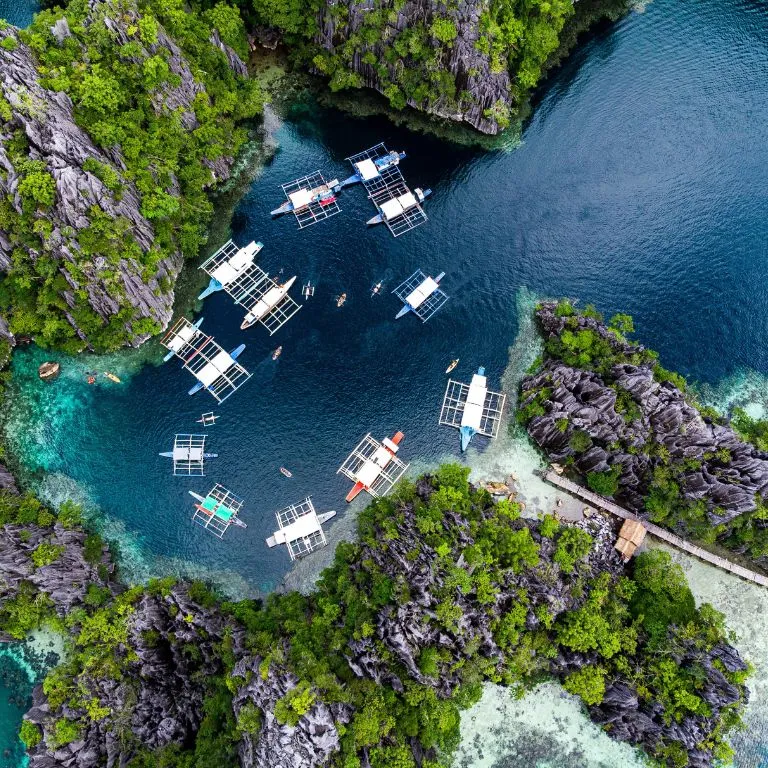
Here, towering limestone karst formations rise from turquoise waters, creating a landscape that looks like it was painted by an artist with an impossible imagination.
Small islands dot the seascape, each with hidden beaches, secret lagoons, and marine ecosystems that teem with life.
Island hopping in El Nido is not just a tourist activity; it’s an exploration of a marine wonderland. Each boat tour reveals different facets of this extraordinary landscape.
In the Big Lagoon, kayaking between massive limestone walls feels like navigating through a natural cathedral. The water is so clear that you can see coral formations and tropical fish darting beneath your vessel.
Small beaches tucked between rocky formations invite spontaneous stops—moments of pure, unadulterated tropical bliss.
The silence between islands, broken only by the lapping of waves against the hull, is itself a kind of luxury that no resort could manufacture.
4. The Tagbanua Community
The local Tagbanua indigenous community plays a crucial role in preserving El Nido’s ecological balance.
They have been granted ancestral domain rights to many of the islands and beaches, ensuring sustainable tourism practices that protect both the environment and their traditional way of life.
Interacting with community members provides insights into a way of life that has remained relatively unchanged for centuries, deeply connected to the sea and the land.
5. Diverse Culinary
Culinary experiences in Palawan are as rich and diverse as its landscapes. Fresh seafood dominates the cuisine, with dishes like kinilaw (a local ceviche) showcasing the incredible marine bounty.
Local markets in Puerto Princesa and El Nido burst with tropical fruits, fresh catch of the day, and traditional Filipino dishes that blend indigenous cooking methods with influences from Chinese, Spanish, and Malaysian cuisines.
Eating here is not simply sustenance, it is a ritual, a conversation between land and table, sea and plate. Every meal shared with locals carries the warmth of genuine Filipino hospitality, a generosity of spirit as nourishing as the food itself.
6. Odyssey of Discovery
As the sun sets over Palawan, painting the sky in hues of orange, pink, and deep purple, the true magic of this island becomes apparent.
It’s not just about the stunning visual landscapes or the incredible biodiversity. Palawan represents a delicate balance between human existence and natural wonder, a place where conservation efforts and traditional knowledge work in harmony to preserve an extraordinary ecosystem.
My journey through Palawan was more than a travel experience, it was a profound connection with a place that reminds us of the planet’s incredible diversity and beauty.
From the mysterious Underground River to the breathtaking seascapes of El Nido, every moment was a testament to the magic that exists when nature is respected and protected.
For travelers seeking more than just a vacation—those who want to be transformed by a destination—Palawan offers an odyssey of discovery. It is a reminder that our world is far more complex, beautiful, and interconnected than we often realize. Palawan does not simply welcome you; it calls you back long after you’ve left.
Getting Here
For international tourists, the fastest way to get to Palawan is through a 1.5- to 2-hour flight from Manila Airport to Puerto Princesa, El Nido, or Coron airports. Alternatively, a 24 to 28-hour ferry;travel is also available from Manila to Puerto Princesa or Coron.