Which U.S. State Has the Most Lakes? 10 Lake-Rich States Compared
Minnesota is usually the first place people think of when lakes come up. Its “Land of 10,000 Lakes” nickname is so familiar that it almost sounds like the answer is already settled.
It is not.
Alaska has more lakes than any other U.S. state, and the gap is enormous. According to the Alaska Department of Fish and Game, the state has more than three million lakes larger than five acres, spread across its tundra, forests, wetlands and remote interior. Many are unnamed, and some are so far from roads or towns that most travelers will never see them in person.
Minnesota and Wisconsin still have good reasons to be proud of their lake totals. According to the Minnesota Department of Natural Resources, Minnesota has 11,842 lakes covering at least 10 acres, while the Wisconsin Department of Natural Resources reports around 15,000 lakes. The difference between those figures is not as simple as it first appears, because each state counts lakes in its own way.
This guide explains why Alaska comes out on top, where Minnesota and Wisconsin fit into the picture, and which lake-rich states are actually easiest to visit. For a different type of comparison, you can also explore the cleanest lakes in the United States.
Quick Take: Which State Has the Most Lakes?
Alaska has the most lakes in the United States. It has more than three million lakes larger than five acres, most of them natural, remote and unnamed.
Wisconsin reports around 15,000 lakes, while Minnesota officially recognizes 11,842 lakes measuring at least 10 acres. Those totals are not directly comparable because the two states use different size limits and classifications.
Why Alaska Has More Lakes Than Any Other State
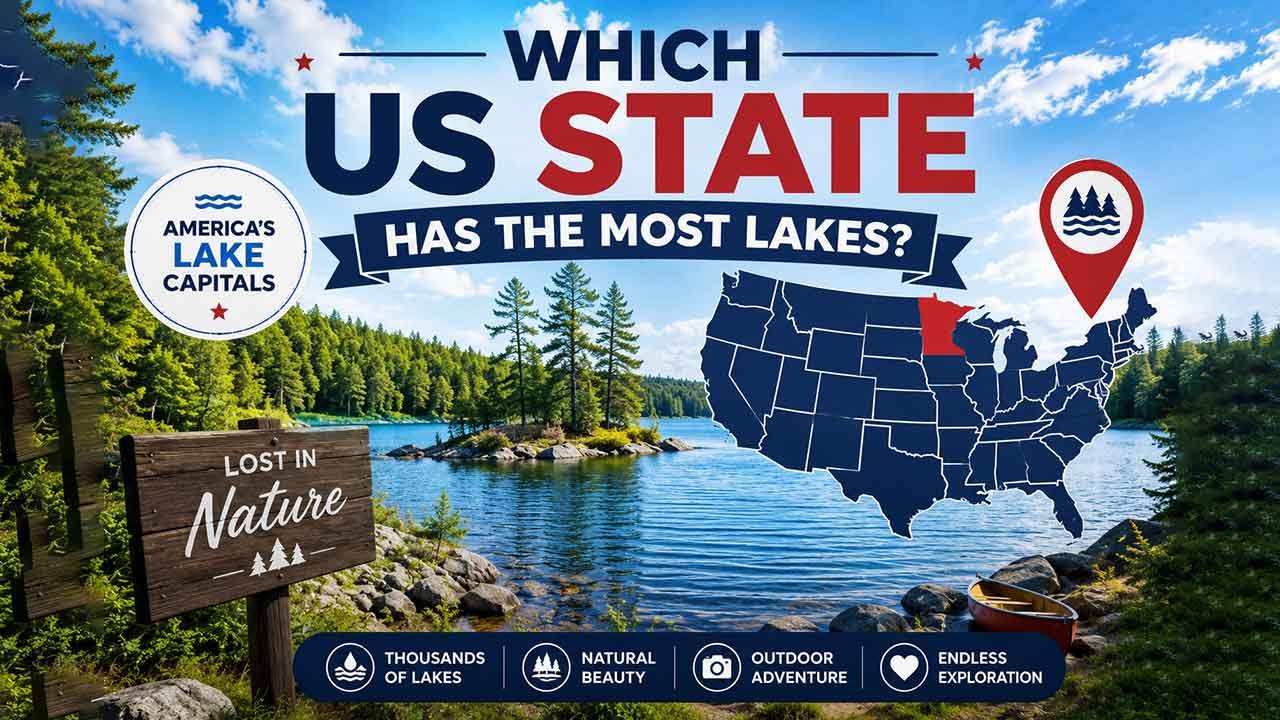
Alaska wins by a margin that no other state comes close to matching.
The state’s size plays a major role. Alaska is larger than Texas, California and Montana combined, giving water far more space to collect across valleys, lowlands and frozen ground.
A large share of its lakes are shallow and scattered across northern tundra. Others sit in glacial valleys, mountain basins or wetlands that may be dozens of miles from the nearest road.
Only a fraction of them have official names.
Iliamna Lake is the largest freshwater lake in Alaska and one of the state’s best-known natural features. It covers more than 1,000 square miles, making it feel more like an inland sea than a typical lake.
Becharof Lake, Naknek Lake and Teshekpuk Lake are also among Alaska’s larger waters, but even together they represent only a tiny part of the state’s total.
The scale of these remote landscapes is one reason Alaska is often included among the most beautiful states in America.
Why Does Alaska Have So Many Lakes?
There is no single reason. Alaska’s lake count comes from a mix of geography, geology and climate.
Glaciers Left Thousands of Basins Behind
Glaciers once covered or moved across large parts of Alaska. As they advanced, they scraped and reshaped the land beneath them.
When the ice finally retreated, it left countless depressions behind. Rain, snowmelt and groundwater later filled many of those low points, creating lakes of different shapes and sizes.
The same process helped form lakes across Minnesota, Wisconsin, Michigan and other northern states. Alaska simply has a much larger landscape for it to happen across.
Frozen Ground Holds Water Near the Surface
Permafrost is another major factor.
In northern Alaska, the ground beneath the surface stays frozen for long periods. Water cannot drain into it as easily as it would in warmer areas, so it collects in shallow basins.
The result is a landscape filled with ponds, wetlands and tundra lakes.
Some additional basins appear when permafrost begins to thaw. The ground sinks unevenly, leaving depressions where water can gather. These are often known as thermokarst lakes.
Most of the Landscape Remains Undeveloped
Alaska has relatively few roads and settlements compared with its total land area.
Across much of the state, rivers, wetlands and lakes continue with little interference from engineered drainage systems or urban development.
That combination of open space, glacial history and frozen ground explains why Alaska’s lake total is not just slightly higher than Minnesota’s or Wisconsin’s. It is hundreds of times larger.
Why Lake Counts Differ Between States
Counting lakes sounds simple until you look at the rules behind the numbers.
There is no single national standard that every state follows. One state may count only larger natural lakes, while another may include small ponds, reservoirs or unnamed water bodies.
That is why state rankings often change from one source to another.
Minimum Size
The smallest lake included in a count can make a huge difference.
Minnesota counts lakes that cover at least 10 acres. Alaska’s commonly quoted estimate applies to lakes larger than five acres. Wisconsin includes many smaller waters in its broad statewide total.
A lake covering seven acres may count in Alaska or Wisconsin but not in Minnesota.
Once that difference is repeated across thousands of water bodies, the final totals can look very different.
Natural Lakes and Reservoirs
Natural lakes form without deliberate human construction.
Reservoirs are usually created when a dam is built across a river or stream. They may be used for drinking water, flood control, irrigation, electricity or recreation.
Some state databases combine natural lakes and reservoirs. Others separate them.
A state with a large number of artificial impoundments can therefore appear higher in a broad water-body ranking without having the same number of natural lakes.
Lakes and Ponds
There is no universally accepted rule that clearly separates a pond from a lake.
Some states publish one combined total for lakes and ponds. Others use size thresholds, depth or official map classifications.
That makes it difficult to compare a broad lake-and-pond count with Minnesota’s clearly defined 10-acre standard.
Named and Unnamed Lakes
Names can also affect the total.
Millions of Alaska’s lakes lie in places with few roads, towns or permanent residents. Most have never received formal names.
A list based only on named lakes would therefore make Alaska appear far less lake-rich than it actually is.
States With the Most Lakes
The figures below are useful for a broad comparison, but they do not follow one shared national counting method.
These figures are useful for comparison, but they are not based on one national counting standard. States use different minimum sizes and may include or exclude ponds, reservoirs and unnamed water bodies. For example, New York’s combined total of lakes, ponds and reservoirs is not directly comparable with Minnesota’s count of lakes covering at least 10 acres.
| State | Approx. Lake Count | Counting Basis |
|---|---|---|
| Alaska | More than 3 million | Lakes larger than five acres |
| Wisconsin | Around 15,000 | Broad statewide lake count |
| Minnesota | 11,842 | Lakes covering at least 10 acres |
| Michigan | More than 11,000 | Inland lakes, excluding the Great Lakes |
| Washington | More than 8,000 | Statewide lake estimate |
| Florida | More than 7,700 | Statewide lake count |
| New York | More than 7,500 | Lakes, ponds and reservoirs |
| Maine | Around 5,785 | Lakes in the state dataset |
| Idaho | More than 3,000 | Commonly cited natural-lake count |
| Massachusetts | More than 3,000 | Lakes and ponds |
1. Alaska – More Than 3 Million Lakes
Alaska is in a category of its own.
Its lakes are spread across Arctic tundra, boreal forest, mountain valleys and broad wetland areas. Most formed naturally, and many sit far from any road or community.
That remoteness is important for travelers to understand.
Alaska may have millions of lakes, but many are not simple places to visit. Reaching them may require a floatplane, boat or backcountry journey.
More accessible lake experiences are available around Anchorage, the Kenai Peninsula, Denali and other areas connected to the state’s limited road network.
For visitors, Alaska is less about easy lakeside resorts and more about wilderness, wildlife and a sense of scale that is difficult to find elsewhere.
2. Wisconsin – Around 15,000 Lakes
Wisconsin commonly reports around 15,000 lakes, giving it one of the highest broad state totals in the country.
Glaciers shaped much of the landscape, especially in northern and central Wisconsin. As the ice retreated, it left depressions that slowly filled with water.
Lake Winnebago is the state’s largest inland lake, but Wisconsin’s appeal is often found around its smaller waters.
Northern Wisconsin is closely associated with fishing cabins, forested shorelines and family-run resorts. Boating, swimming and quiet weekends by the water are part of the state’s identity.
Wisconsin is generally much easier to experience than Alaska for a traditional lake vacation.
Its total still needs context, though. The state includes many small lakes that would not meet Minnesota’s 10-acre minimum.
3. Minnesota – 11,842 Lakes
Minnesota officially counts 11,842 lakes covering at least 10 acres.
That means its famous “Land of 10,000 Lakes” nickname actually understates the total.
Mille Lacs Lake, Leech Lake, Lake Vermilion, Red Lake and Lake Minnetonka are among the best-known waters, but Minnesota’s lake culture extends well beyond a few famous names.
Lakes sit beside towns, roads, cabins and parks across much of the state. They are closely connected to fishing, paddling, boating and summer holidays.
Visitors looking for something more adventurous can head north to the Boundary Waters Canoe Area Wilderness, while families can find developed beaches and resorts in more accessible areas.
When Wisconsin and Minnesota are measured using the same 10-acre standard, Minnesota generally comes out ahead.
That is why both states can make credible claims without either one necessarily being wrong.
4. Michigan – More Than 11,000 Inland Lakes
According to the Michigan Department of Natural Resources, Michigan has more than 11,000 inland lakes, in addition to bordering four of the five Great Lakes.
The inland figure does not include Lake Superior, Lake Michigan, Lake Huron or Lake Erie. Those enormous shared waters are considered separately.
Houghton Lake is Michigan’s largest inland lake by surface area. Torch Lake is known for its depth and striking blue-green water, while Higgins Lake, Crystal Lake and Glen Lake are also popular for swimming and boating.
Several of these waters also appear among the cleanest lakes in Michigan because of their clear water and scenic surroundings.
Michigan works especially well for road trips. Travelers can move between inland lakes, sandy beaches, forested peninsulas and Great Lakes shorelines without leaving the state.
5. Washington – More Than 4,000 Lakes
Washington has more than 8,000 lakes, based on figures used by the Washington State Department of Ecology. These range from urban waters to isolated alpine lakes in the Cascade and Olympic mountains.
Lake Washington sits beside Seattle and is one of the easiest major lakes in the state to reach.
Lake Chelan stretches through a steep mountain valley and is known for its depth, clear water and nearby vineyards. Its setting makes it one of Washington’s most rewarding lake destinations.
Many smaller lakes can only be reached on foot, which makes the state especially attractive to hikers.
6. Florida – More Than 7,700 Lakes
According to the Florida Department of Environmental Protection, Florida has more than 7,700 lakes, although totals can vary depending on the size threshold and how water bodies are classified.
Some broader databases produce much higher numbers by including artificial ponds, stormwater basins and small impoundments. Those figures should not be treated as natural-lake totals.
Florida’s lakes also have a different geological story from those in the Upper Midwest.
The state’s flat terrain, wetlands, limestone bedrock and high groundwater levels all contribute to lake formation. In some places, underground limestone dissolves and the ground above it collapses, leaving a basin that later fills with water.
Lake Okeechobee is Florida’s largest lake and one of the most important freshwater ecosystems in the Southeast.
For travelers, Florida offers warm-weather fishing, wildlife and lake trips that can easily be combined with springs, beaches or theme parks.
7. New York – More Than 7,500 Lakes, Ponds and Reservoirs
New York has more than 7,500 lakes, ponds and reservoirs, based on data from the New York State Department of Environmental Conservation.
Its best-known waters include Lake George, Oneida Lake and the Finger Lakes. The Adirondacks also contain a large concentration of smaller lakes and ponds surrounded by forest and mountain scenery.
Seneca Lake and Cayuga Lake are the two largest Finger Lakes.
The region around them is especially popular for scenic drives, wineries and small-town travel, which gives New York a different kind of lake experience from Alaska or Minnesota.
Because the state combines lakes, ponds and reservoirs in its total, the number should not be compared directly with natural-lake-only counts.
8. Maine – Around 5,785 Lakes
Official data from the Maine Department of Environmental Protection identifies 5,785 lakes across the state, while broader descriptions may include ponds and produce slightly different totals.
Moosehead Lake is the largest lake in the state. Its forested shoreline and mountain backdrop make it one of New England’s most recognizable freshwater landscapes.
Sebago Lake is another major body of water and an important source of drinking water.
Maine is a good choice for visitors who prefer quiet cabins, paddling, wildlife and fall scenery over large resort towns.
9. Idaho – More Than 3,000 Natural Lakes
Idaho is home to more than 3,000 natural lakes, based on figures from Idaho Fish and Game.
Many are hidden in alpine or backcountry settings, particularly in areas such as the Sawtooth Range.
Lake Pend Oreille is the largest lake in Idaho and one of the deepest in the United States. Priest Lake, Redfish Lake and Payette Lake are also well known for camping, boating and mountain scenery.
Some of Idaho’s smaller lakes require a long hike to reach, which adds to their appeal for outdoor travelers.
Published totals vary depending on whether reservoirs, managed fishing waters or unnamed mountain lakes are included.
10. Massachusetts – Around 3,000 Lakes and Ponds
Massachusetts has more than 3,000 lakes and ponds, based on information from the Massachusetts Lakes and Ponds Program.
Many natural ponds were shaped by glaciers.
Cape Cod’s kettle ponds formed when blocks of buried ice melted and left rounded depressions that later filled with groundwater.
The state also contains large artificial waters. Quabbin Reservoir, for example, was created as part of Massachusetts’ drinking-water system and should not be described as a natural lake.
Massachusetts is a practical option for travelers who want to combine freshwater swimming with historic towns, coastal drives and a wider New England trip.
Does Wisconsin Have More Lakes Than Minnesota?
Wisconsin reports around 15,000 lakes, compared with Minnesota’s official total of 11,842.
At first glance, that makes Wisconsin look like the clear winner.
The problem is that the two states are not counting the same way.
Minnesota includes only lakes covering at least 10 acres. Wisconsin’s broader total includes many smaller waters.
That means all three statements below can be accurate:
- Wisconsin reports the larger broad statewide total.
- Minnesota generally has more lakes when the same 10-acre minimum is used.
- Alaska has far more lakes than either state.
The disagreement is mostly about methodology, not whether Minnesota or Wisconsin deserves its lake-rich reputation.
Why Is Minnesota Called the Land of 10,000 Lakes?
Minnesota’s nickname was never meant to be a precise modern count.
The state officially recognizes 11,842 lakes of at least 10 acres, so the slogan actually falls short of the real number.
The nickname has lasted because lakes are such a visible part of life in Minnesota. They sit beside homes, towns, highways, cabins and parks.
Alaska may have millions more, but most of its lakes are remote. Minnesota’s lakes are easier to see, visit and build traditions around.
That cultural connection is what made “Land of 10,000 Lakes” stick.
Which State Has the Most Natural Lakes?
Alaska has the most natural lakes in the United States.
Its total includes millions of glacial, tundra and wetland lakes formed without deliberate human construction. Most are located in sparsely populated areas, and many have never received official names.
The ranking can look different when reservoirs, farm ponds and stormwater basins are added.
For naturally formed lakes, however, Alaska remains the clear national leader.
Which Lake-Rich State Is Best to Visit?
The state with the highest lake count is not automatically the best choice for every traveler.
| Best For | State | Why It Stands Out |
| Remote wilderness | Alaska | Vast landscapes, wildlife and undeveloped lakes |
| Easy lake vacations | Minnesota | Accessible lakes, cabins, beaches and parks |
| Fishing and cabin trips | Wisconsin | Recreational lakes and northern resorts |
| Scenic road trips | Michigan | Inland lakes and Great Lakes shorelines |
| Warm-weather visits | Florida | Fishing, wildlife and year-round travel |
| Alpine hiking | Washington or Idaho | Mountain scenery and trail-accessed lakes |
| Quiet cabins and fall color | Maine | Forested shores and a peaceful setting |
| Wineries and small towns | New York | The Finger Lakes combine scenery and local travel |
Alaska is the strongest choice for wilderness and remoteness.
Minnesota and Wisconsin are easier for a classic lake holiday with cabins, boating and family-friendly recreation.
Michigan is particularly good for travelers who want inland lakes and dramatic Great Lakes scenery in the same trip.
The Final Verdict
Alaska has the most lakes of any U.S. state, with more than three million spread across its vast and largely undeveloped landscape.
Minnesota has the famous nickname, while Wisconsin reports a slightly higher broad statewide total. Neither comes close to Alaska once its remote natural lakes are included.
For travelers, the most practical choice may be different. Alaska is best for wilderness, while Minnesota, Wisconsin and Michigan offer easier access to cabins, beaches, boating and summer lake trips.
For the largest number of lakes, Alaska is the answer. For a more convenient lake getaway, Minnesota or Wisconsin may suit most visitors better.
Frequently Asked Questions
Alaska has the most lakes of any U.S. state, with more than three million lakes spread across its vast landscape.
Alaska has more than three million lakes larger than five acres. Most are remote, and many have never been formally named.
Yes. Alaska has more than three million lakes, while Minnesota officially counts 11,842 lakes measuring at least 10 acres.
Wisconsin reports the larger broad statewide total. Minnesota generally has more when the same 10-acre minimum is applied to both states.
No. Michigan’s commonly reported total of more than 11,000 refers to inland lakes. The four Great Lakes touching Michigan are counted separately.
Minnesota is known as the Land of 10,000 Lakes, even though it officially has 11,842 lakes covering at least 10 acres.
Sources use different minimum sizes and may include or exclude ponds, reservoirs, artificial impoundments and unnamed water bodies.