How Many States Are in the US? 50 States, Not 52
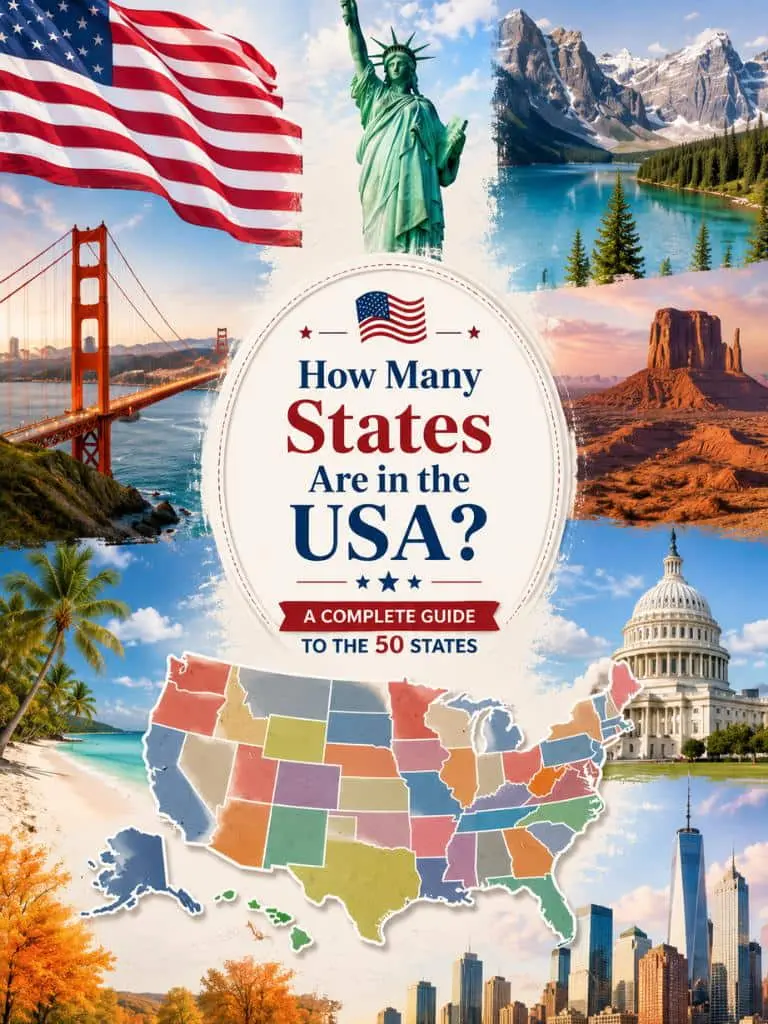
There are exactly 50 states that constitute the United States. This official number is what everybody uses for school, road trips, the census, and maps. Some people say there are 52 states in the United States. They actually include Washington, D.C. and Puerto Rico, in this tally, but those are not the U.S. states. The U.S. has 50 states, one federal district, and several territories. Each state has its own government and capital city, listed together in our 50 states and capitals list.
Whether you are checking a map, planning a road trip, comparing U.S. regions, or answering a simple geography question, this guide explains the 50 states clearly and shows how they fit into the wider American travel picture.
| How many states are in the US? | 50 |
| Are there 50 or 52 states? | 50 |
| Is Washington, D.C. a state? | No, it is a federal district |
| Is Puerto Rico a state? | No, it is a U.S. territory |
| How many contiguous states are there? | 48 |
| Last state added | Hawaii in 1959 |
Why Do Some People Think There Are 52 States?
Some people think the U.S. has 52 states because they mistakenly count Washington, D.C. and Puerto Rico alongside the 50 states. But they are not states. Washington, D.C. is a federal district, while Puerto Rico, Guam, and other U.S. territories are under U.S. jurisdiction but are not full states.
That is why the 50 or 52 states confusion comes up so often. Officially, the answer is simple: the United States has 50 states.
The last two states admitted to the Union were Alaska and Hawaii in 1959. Alaska became the 49th state, and Hawaii became the 50th state. No new state has been added since then.
What you should know about Washington, D.C., and the territories?
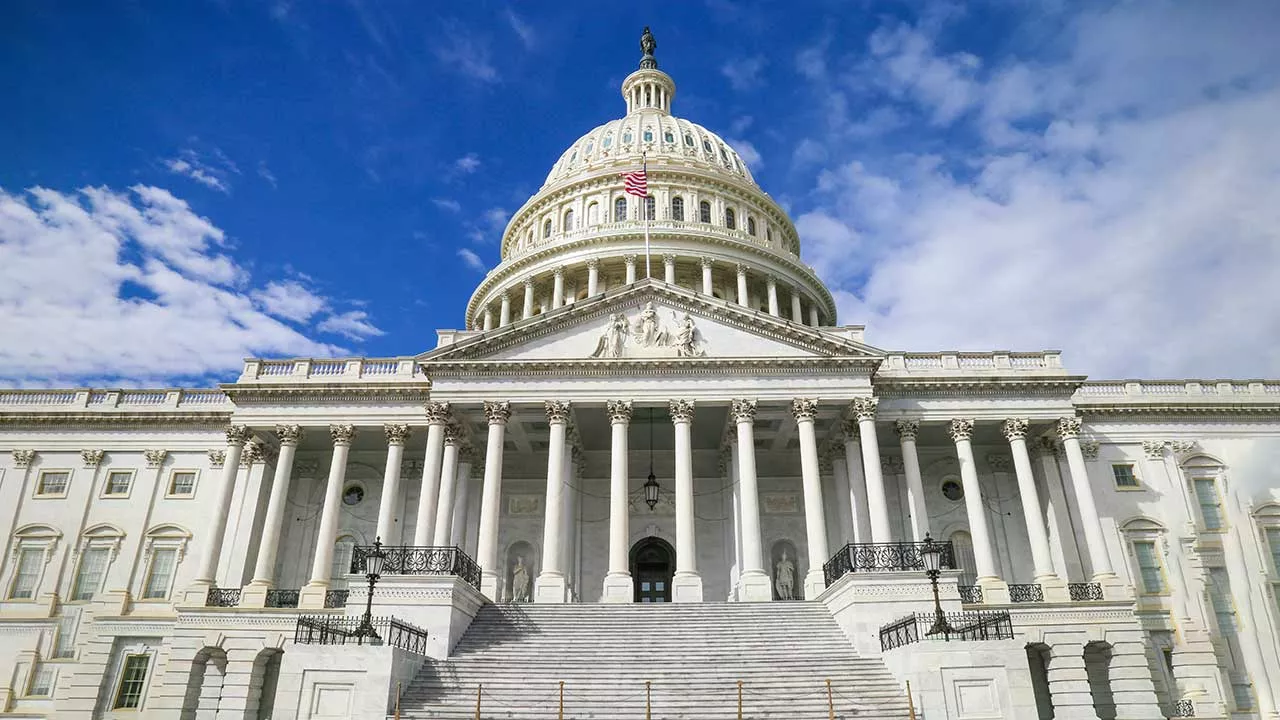
Washington, D.C., is the federal district and the capital of the nation where residents pay federal taxes, but they do not have voting representation in the U.S. Senate and are represented by a single non-voting delegate in the House of Representatives. Territories include Puerto Rico, Guam, the U.S. Virgin Islands, American Samoa, and the Northern Mariana Islands. The children born in most territories are citizens of the United States. Now here is a slight change; in American Samoa, people are nationals of the United States by birth, but they are not automatically citizens. These differences are of greater significance during voting rights, representation, and federal programs.
List of 50 US states, capitals, year admitted, and interesting facts
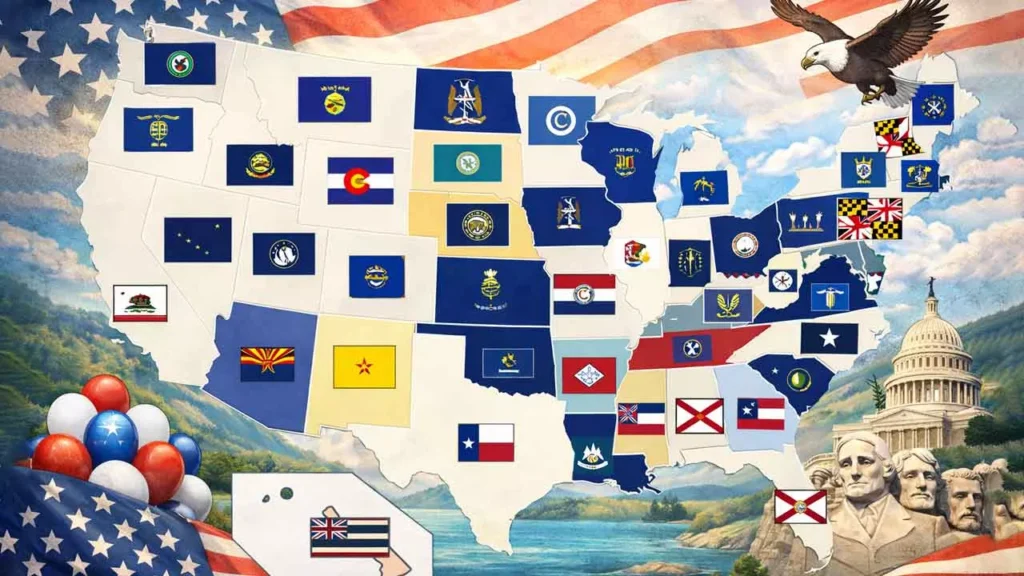
The table I have created below is in alphabetical order, so it is easy for you to scan and see exactly how many states are in the United States. For each state, I added its capital, the year the state joined the Union, and interesting facts about it.
Since each state also belongs to a wider U.S. region, our U.S. states by region guide shows how all 50 states are grouped into the Northeast, Midwest, South, and West.
| State | Capital | Year admitted | Interesting facts | Region |
|---|---|---|---|---|
| Alabama (AL) | Montgomery | 1819 | The Huntsville’s Marshall Space Flight Center is a the main rocket research hub in America. | South |
| Alaska (AK) | Juneau | 1959 | It is the largest U.S. state and home to Denali, the highest peak in North America, 20,310 feet (6,190 meters) above sea level. | West |
| Arizona (AZ) | Phoenix | 1912 | It is home to the Grand Canyon, which is one of the world’s deepest canyons. | West |
| Arkansas (AR) | Little Rock | 1836 | Hot Springs National Park is one of the oldest federal reserves. | South |
| California (CA) | Sacramento | 1850 | It has the highest population in the country and is the center of the United States’ film industry. If it were a country, its economy would be the 5th in the world. | West |
| Colorado (CO) | Denver | 1876 | The high-altitude state has the Rockies and major ski areas, offering some of the best hikes. | West |
| Connecticut (CT) | Hartford | 1788 | Home to Yale University, one of the oldest universities in the United States. | Northeast |
| Delaware (DE) | Dover | 1787 | It was the first state to endorse the U.S. Constitution. | Northeast (Mid-Atlantic) |
| Florida (FL) | Tallahassee | 1845 | You must have heard about its beaches and major theme parks. It is the only place on Earth where alligators and crocodiles coexist in the wild (The Everglades). | South |
| Georgia (GA) | Atlanta | 1788 | Atlanta is a major transport hub and a media industry center. | South |
| Hawaii (HI) | Honolulu | 1959 | This is the only state in America that is made of islands entirely and it also happens to be the most gorgeous. | West |
| Idaho (ID) | Boise | 1890 | Potatoes and wide high-desert landscapes are two main things people know it for. | West |
| Illinois (IL) | Springfield | 1818 | Chicago redesigned contemporary architecture and commerce. | Midwest |
| Indiana (IN) | Indianapolis | 1816 | The Indianapolis 500 auto race holds here. | Midwest |
| Iowa (IA) | Des Moines | 1846 | When it comes to agricultural production, especially corn, the name Iowa surfaces. | Midwest |
| Kansas (KS) | Topeka | 1861 | The state has the geographic center of the contiguous United States. | Midwest |
| Kentucky (KY) | Frankfort | 1792 | Site of the Kentucky Derby horse race in Louisville. | South |
| Louisiana (LA) | Baton Rouge | 1812 | Jazz originated from New Orleans and is famous for Mardi Gras. | South |
| Maine (ME) | Augusta | 1820 | Well regarded for its massive coastline and lobster-fishing industry. | Northeast |
| Maryland (MD) | Annapolis | 1788 | The Chesapeake Bay is famous for its seafood and its history of living on the water. | South |
| Massachusetts (MA) | Boston | 1788 | It is where early American history happened and where Harvard, the oldest university, was built. | Northeast |
| Michigan (MI) | Lansing | 1837 | It is the only state where you find four of the five Great Lakes, and it is famous for making cars. | Midwest |
| Minnesota (MN) | St. Paul | 1858 | A place with thousands of lakes and people who love being outside. | Midwest |
| Mississippi (MS) | Jackson | 1817 | Where blues music began, with roots that go back a long way. | South |
| Missouri (MO) | Jefferson City | 1821 | The Arch in St. Louis stands for the history of people moving out West. | Midwest |
| Montana (MT) | Helena | 1889 | Welcome the wide-open spaces and huge national parks | West |
| Nebraska (NE) | Lincoln | 1867 | It has many flat plains and the old trails used by pioneers. | Midwest |
| Nevada (NV) | Carson City | 1864 | Las Vegas is the state’s engine for music, gambling, and shows. | West |
| New Hampshire (NH) | Concord | 1788 | This state held the very first presidential primary election. | Northeast |
| New Jersey (NJ) | Trenton | 1787 | A crowded state with lots of famous beach towns along the ocean. | Northeast |
| New Mexico (NM) | Santa Fe | 1912 | Famous for its Native American history and huge hot-air balloon festival. | West |
| New York (NY) | Albany | 1788 | NYC is the nation’s center for money, fashion, and culture. | Northeast |
| North Carolina (NC) | Raleigh | 1789 | Home to a huge tech research area and beautiful mountains. | South |
| North Dakota (ND) | Bismarck | 1889 | A prairie state that produces a lot of the country’s energy. | Midwest |
| Ohio (OH) | Columbus | 1803 | The Wright brothers, who invented the airplane, were from here. Also known as the “Mother of Presidents,” as eight U.S. Presidents were born here. | Midwest |
| Oklahoma (OK) | Oklahoma City | 1907 | Home to many Native American tribes and famous for its tornadoes. | South |
| Oregon (OR) | Salem | 1859 | Known for its deep blue Crater Lake and rugged Pacific coast. | West |
| Pennsylvania (PA) | Harrisburg | 1787 | The U.S. was “born” here when the founders met in Philadelphia. | Northeast |
| Rhode Island (RI) | Providence | 1790 | The smallest state in the entire country. | Northeast |
| South Carolina (SC) | Columbia | 1788 | Known for the history of Charleston and its beautiful coast. | South |
| South Dakota (SD) | Pierre | 1889 | This is where you will find Mount Rushmore carved into the mountain. | Midwest |
| Tennessee (TN) | Nashville | 1796 | Nashville is known as the capital of country music, while Memphis played a major role in the development of blues and rock ‘n’ roll. | South |
| Texas (TX) | Austin | 1845 | It was its own country before joining the United States. And the only state to have the flags of six different nations fly over it during its history. | South |
| Utah (UT) | Salt Lake City | 1896 | Famous for its religious history and five stunning national parks. | West |
| Vermont (VT) | Montpelier | 1791 | Best known for its green mountains and delicious maple syrup. | Northeast |
| Virginia (VA) | Richmond | 1788 | The site of the first permanent English settlement at Jamestown. | South |
| Washington (WA) | Olympia | 1889 | A tech hub in Seattle with huge glaciers on Mount Rainier. | West |
| West Virginia (WV) | Charleston | 1863 | It broke away from Virginia during the Civil War to stay with the North. | South |
| Wisconsin (WI) | Madison | 1848 | It is the dairy capital which makes more cheese than almost anywhere else. | Midwest |
| Wyoming (WY) | Cheyenne | 1890 | Home to Yellowstone National Park and the first national park in the world | West |
How Many Contiguous States Are There?
There are 48 contiguous states. These are the connected states on the North American mainland. Alaska is separated from the lower 48 by Canada, and Hawaii is an island chain in the Pacific, so neither is counted as contiguous.
How the 50 States Shape Travel Across the U.S.
Visit Northeast – for history and compact charm
Check out the Northeast if you love history and cozy vibes. You can walk through most of these towns easily. Start in Boston to see where America began, then head to the coast for lighthouses and lobster rolls. The national parks here are great for day hikes with amazing ocean views. Just a heads-up: the weather changes fast, so pack a jacket!
Visit Mid-Atlantic and Midwestern lakes – for towns, food, and calm water
If you like “Main Street” vibes and huge lakes, head to the Great Lakes. Places like Lake Superior and clear water lakes are perfect for a quiet boat day or taking photos. The little towns nearby always have cool festivals and surprisingly good food you won’t find anywhere else.
Visit the South – for food, music, and slow afternoons
The South is all about great music and even better food. Cities like Nashville and New Orleans are like giant music boxes where you can find museums by day and awesome snacks by night. It is also a great place to see old buildings and pretty riverfront parks. Everything moves a little slower here, so it is perfect for a relaxing trip.
Visit Mountain West – for peaks and long views
If you want to see mountains that actually take your breath away, this is the place. Famous spots like Mount Rainier and Denali are not great to witness but you can also hike through flowery meadows or even see a glacier.
Pro tip: You usually need a permit to hike or climb these big peaks, so you have to plan months in advance.
Visit the West Coast and the Pacific islands – for coastal drives, volcanoes, and islands
The West Coast has everything from the rocky shores of Oregon to the sunny surf spots in California. If you want something even more unique, head to Hawaii. It is like another world where you can jump between islands, see active volcanoes, and spend all day in the ocean.
Map of all 50 U.S. states

FAQs
There are 50 states, which is the official count used by the federal government.
It is the District of Columbia, the federal capital. It is not a state and has different representation rules.
People sometimes say 52 because they include Washington, D.C., and Puerto Rico. Officially, the United States has 50 states.
A territory seeking statehood typically holds a local referendum, then asks Congress for an enabling act. Congress may pass an enabling act authorizing a constitutional convention. If the territory drafts and ratifies a constitution acceptable to Congress, Congress can pass an act admitting the new state; the president then signs it. The process traces back to the Northwest Ordinance and is ultimately a political act handled by Congress.
In theory it can. New states require Congressional approval. Proposals appear from time to time, but admissions are rare and political. The last states added in the statehood were Alaska and Hawaii – in 1959.
No, Puerto Rico is not one of the 50 U.S. states. It is a U.S. territory, which means it is connected to the United States but does not have the same status as a state. That is why Puerto Rico is not included when people count the official 50 states. USAGov also lists Puerto Rico separately under state/territory government resources.
There are 48 contiguous states in the U.S. These are the states that are connected to each other on the mainland. Alaska and Hawaii are part of the United States, but they are not contiguous because Alaska is separated by Canada and Hawaii is an island chain in the Pacific. The Census also describes 48 states and D.C. as contiguous.
The “lower 48 states” are the 48 connected states on the U.S. mainland, excluding Alaska and Hawaii. People often use this phrase when talking about road trips, shipping, weather, or travel distances across the mainland United States.
Hawaii was the last state added to the United States. It became the 50th state on August 21, 1959. Alaska joined earlier the same year as the 49th state, so 1959 was the last time the official U.S. state count changed.
Yes, the U.S. has territories in addition to its 50 states. These include places such as Puerto Rico, Guam, the U.S. Virgin Islands, American Samoa, and the Northern Mariana Islands. They are part of the wider U.S. system, but they are not counted as states. USAGov lists states and territories separately, which helps explain why they do not change the official state count.